Nosing: What Your Nose Knows That Your Tongue Doesn't
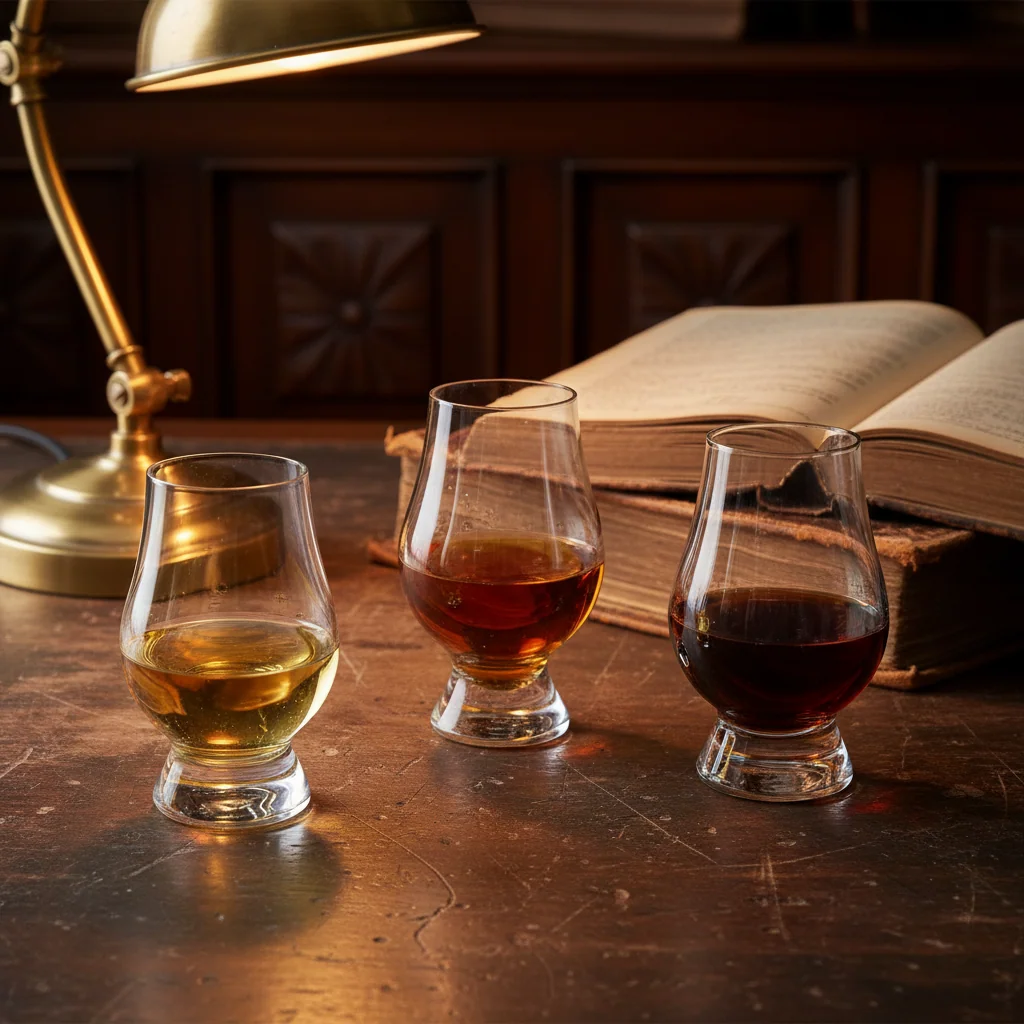
The log reads: "Crew member insisted he could not smell anything in the glass beyond alcohol. Advised him to open his mouth. He looked at me like I had lost my mind. Ten seconds later he found vanilla, orchard fruit, and something he described as 'warm cardboard.' Promoted him on the spot." Some discoveries require only a change of approach.
Here is a fact that will reframe how you think about every dram you have ever had: roughly 70% of what you perceive as flavour is actually smell. Your tongue handles five basic tastes — sweet, salt, sour, bitter, umami. Everything else, every complex note from heather honey to creosote to Christmas cake, that is your nose doing the heavy lifting. Learning to nose whiskey properly is not a party trick. It is the single most useful skill you can develop.
Why Your Nose Matters More Than Your Tongue
Your tongue is a blunt instrument. It detects five basic tastes and not much else. The real complexity engine is your olfactory system — roughly 400 types of scent receptors that can distinguish over a trillion different odour combinations. When you sip whiskey, volatile compounds travel up the back of your throat to your nasal cavity (this is called retronasal olfaction), and that is where the magic happens.
This is why food tastes of nothing when you have a cold. Your tongue still works — you can tell sweet from salty — but the detail, the character, the personality of what you are eating or drinking disappears entirely. Block your nose while sipping whiskey and it becomes a warm, vaguely sweet liquid. Unblock it and suddenly there is toffee, leather, smoked pear, seaweed.
Your nose is the instrument. Learning to use it properly is learning to hear the whole orchestra instead of just the bass drum.
How to Nose Whiskey Without Burning Your Sinuses
The most common mistake is enthusiasm. People stick their nose deep into the glass and inhale like they are trying to hoover the liquid. The alcohol vapour — especially in anything above 40% ABV — hits the olfactory receptors like a flashbang, and you spend the next two minutes smelling nothing but ethanol.
Here is the proper technique:
- Pour about 25ml into a tulip-shaped glass (a Glencairn is ideal). The narrow opening concentrates the aromas.
- Hold the glass at chest height first, then bring it up slowly. You will start catching aromas before the glass reaches your chin.
- Open your mouth slightly as you nose. This sounds peculiar but it diffuses the alcohol vapour and lets the subtler aromas through. It is the single most useful nosing tip you will ever learn.
- Breathe gently — short, soft inhalations. Do not sniff aggressively.
- Move the glass around — tilt it, shift the angle. Different positions release different compounds from the surface.
The two-nostril trick
Try nosing with one nostril at a time. Each nostril connects to a slightly different part of your olfactory system and can emphasise different notes. Left nostril might pick up fruit; right nostril might catch smoke. It looks ridiculous. It works.
The Aroma Families: A Practical Map
Professional nosers use aroma wheels — circular charts that organise hundreds of specific scents into families. You do not need to memorise one, but understanding the broad families helps you put words to what your nose is finding.
Fruity: Orchard fruit (apple, pear), citrus (lemon, orange peel), tropical (banana, mango), dried fruit (raisin, fig, date). Fruity notes are extremely common in Scotch, particularly from Speyside distilleries and sherry cask maturation.
Sweet: Vanilla, honey, toffee, caramel, butterscotch, chocolate, fudge. These often come from bourbon cask maturation — the American oak imparts vanillin compounds that your nose reads as sweetness.
Floral: Heather, rose, lavender, jasmine. Lighter and harder to catch, these tend to appear in gentler, unpeated whiskies. Highland Park's heathery smoke is a classic example.
Woody/Oaky: Fresh wood, sawdust, cedar, sandalwood, old furniture. These come directly from cask interaction and tend to be stronger in older whiskies or first-fill casks.
Spicy: Cinnamon, nutmeg, ginger, black pepper, clove. Rye-heavy bourbons lean heavily into spice, and sherry cask Scotch often carries cinnamon and clove.
Smoky/Peaty: Bonfire, campfire, tar, creosote, smoked fish, iodine, TCP. If the barley was dried over peat smoke, you will know about it. Islay whiskies live here.
Cereal/Malty: Fresh bread, biscuit, porridge, malt extract. These are often most prominent in younger whiskies where the base spirit character shines through.
Building your scent library
The best way to improve your nosing is outside the glass. Smell everything deliberately — fruit in the supermarket, spices in the cupboard, leather, fresh-cut grass, old books. Your brain can only identify a whiskey aroma if it has a memory to match it against. The bigger your scent library, the more you will find in every glass.
Common Aromas and What They Tell You
Once you start picking out specific notes, they can tell you something about how the whiskey was made:
- Vanilla, coconut, honey — almost certainly spent time in bourbon casks (American oak)
- Dried fruit, Christmas cake, dark chocolate — sherry cask influence, likely Oloroso
- Citrus peel, light florals — often refill casks or younger spirit showing its distillery character
- Smoke, peat, iodine — peated barley, the heavier the smoke the higher the peat level (measured in PPM)
- Maritime notes (salt, seaweed, brine) — coastal distilleries where sea air interacts with the maturing spirit
- Sulphur, rubber, struck match — sometimes a cask fault, sometimes a sherry cask characteristic that blows off with time in the glass
Nose fatigue is real
Your olfactory receptors tire quickly. After three or four concentrated sniffs of the same glass, your nose starts going numb to those particular compounds. Step away, smell your sleeve or the back of your hand (coffee beans are a myth — your own skin works better), and come back in thirty seconds. The aromas will return.
Adding Water Changes Everything
A few drops of water in your glass does not just affect the palate — it transforms the nose. Water breaks surface tension and releases volatile compounds that were locked up. A whiskey at cask strength might nose as nothing but alcohol and heat. Add five drops of water and suddenly there is marzipan, stewed plum, and old leather.
This is not dilution. This is chemistry. Every professional taster noses with water. If it is good enough for the master distiller, it is good enough for you.
The Only Rule Worth Following
There are no wrong answers in nosing. If you smell beeswax and your friend smells toffee, you are both right. Your brain maps scent to memory, and your memories are uniquely yours. A whiskey that reminds you of your grandfather's workshop is giving you a tasting note that no flavour wheel could ever capture.
The goal is not to produce identical notes to the official tasting card. The goal is to slow down, pay attention, and notice what is actually in the glass. Everything else is refinement.
Your nose already knows what it likes. You just need to start listening to it.
Continue the voyage
How to Actually Taste Whiskey (Without Pretending)
A practical, no-nonsense guide to tasting whiskey properly — without the pretentious theatre.
Sherry, Bourbon, Port: How the Cask Shapes Your Dram
Bourbon casks give vanilla, sherry casks give dried fruit, port casks give berry — here's how to read the wood behind your whisky.

Peated vs Unpeated: A Guide for the Peat-Curious
What peat actually is, why some whisky tastes like a campfire, and how to ease yourself in from peat-curious to peat-obsessed.
Decoding a Whiskey Label: What It All Means
Single malt, cask strength, non-chill-filtered — every term on a whiskey label explained in plain English, so you know what you're buying.