Scotch vs Irish vs Bourbon: What Actually Makes Them Different
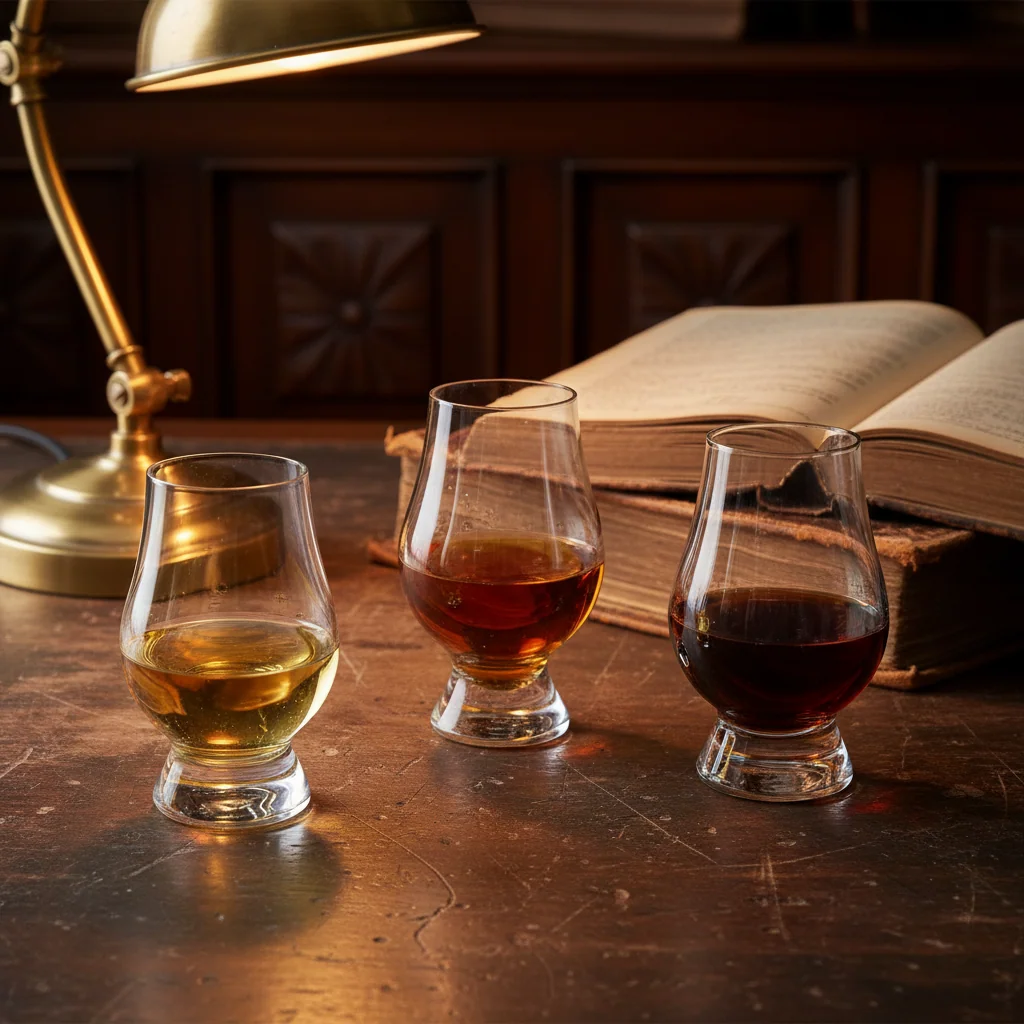
Three glasses on a bar top in a Dublin hotel, each the colour of a different season. The Scotch carried peat smoke and grey Atlantic rain. The Irish was bright and clean, like a morning that had not made up its mind yet. The bourbon sat warm and sticky-sweet, carrying the memory of a Kentucky summer in every sip. Same spirit, same grain, three entirely different languages.
People treat these three categories like they are just regional labels — the same drink made in different postcodes. They are not. The differences run deeper than geography, and once you understand them, you will never confuse a bourbon for a Scotch again.
The Legal Definitions (They Matter More Than You Think)
Every whiskey-producing country has laws defining what can carry the name. These are not suggestions — they are legally enforced, and they create the flavour differences you taste in the glass.
| Scotch | Irish | Bourbon | |
|---|---|---|---|
| Made in | Scotland | Ireland (Republic or NI) | United States |
| Grain bill | Malted barley (single malt) or mixed grains (blends) | Malted and unmalted barley, or mixed grains | Minimum 51% corn |
| Distillation | Typically double (some triple) | Typically triple (some double) | Typically double in column and pot stills |
| Cask type | Used oak (often ex-bourbon) | Used oak (often ex-bourbon or sherry) | New charred American oak (mandatory) |
| Minimum age | 3 years | 3 years | No minimum (2 years for "straight") |
| Caramel colour | Allowed (E150a) | Allowed (E150a) | Not allowed |
| Distilled at max | 94.8% ABV | 94.8% ABV | 80% ABV |
| Bottled at min | 40% ABV | 40% ABV | 40% ABV |
That cask rule is the single biggest driver of flavour difference. Bourbon must use new charred oak, which dumps massive amounts of vanilla, caramel, and sweet oak into the spirit. Scotch and Irish producers then buy those used bourbon barrels — getting a gentler, more subtle oak influence because the first fill already extracted the bold flavours.
How Production Creates Flavour
Scotch: Smoke, Complexity, Time
Scotch whisky (no "e" — the Scots drop it) splits into several categories, but the two that matter most are single malt (one distillery, 100% malted barley) and blended (multiple distilleries, malt and grain whisky combined).
The optional use of peat during malting is what gives some Scotch its famous smokiness. Peat is partially decomposed vegetation burned to dry the barley, and the phenols in the smoke bond to the grain. Not all Scotch is peated — most is not — but the peated examples from Islay are what many people think of when they think "Scotch."
Single malts are pot-distilled, usually twice, which retains more of the heavier flavour compounds. The result is a spirit with more character and more rough edges than triple-distilled alternatives, which then gets shaped by years in oak. The three-year minimum is rarely the goal — most decent single malts sit for ten to eighteen years.
Irish: Smooth, Approachable, Underrated
Irish whiskey's reputation as "the smooth one" is not marketing — it is chemistry. Triple distillation (used by most, though not all, Irish distillers) strips out more congeners and fusel oils, producing a lighter, cleaner spirit. The use of unmalted barley in "pot still" Irish whiskey adds a distinctive creamy, spicy character you will not find anywhere else.
Ireland banned peat smoking centuries ago in practice (though a few modern distillers have brought it back), so Irish whiskey tends toward fruit, honey, and grain sweetness rather than smoke. The smoothness makes it the most approachable of the three for new drinkers, but do not mistake "approachable" for "simple." A good pot still Irish whiskey has as much complexity as any Scotch.
Bourbon: Sweet, Bold, Unapologetic
Bourbon is corn-driven and proud of it. That minimum 51% corn (most use 70-80%) creates a naturally sweet, full-bodied base spirit. The remaining grain bill usually includes rye (for spice) or wheat (for softness), and this is where bourbon sub-styles emerge.
The new charred oak requirement is non-negotiable, and it is transformative. That fresh char layer — essentially a coating of caramelised wood sugars — gives bourbon its signature vanilla, caramel, and toffee notes. Kentucky's temperature swings (scorching summers, freezing winters) force the spirit in and out of the wood, accelerating extraction. A four-year-old bourbon can have more oak influence than a twelve-year-old Scotch.
One Bottle From Each: A Starting Point
If you want to understand each style at its most characteristic, these three bottles are hard to beat.
Talisker
Talisker 10 Year Old
Maritime peat smoke, black pepper, brine, and a surprising sweetness underneath. This is Scotch with its boots on — coastal, robust, and deeply savoury. The peppery finish goes on for days.
Buy on The Whisky ShopMidleton
Redbreast 12 Year Old
The gold standard for pot still Irish whiskey. Sherry-cask richness layered over creamy malt, Christmas spice, and dried fruit. Silky texture with a long, warming finish. If someone tells you Irish whiskey is boring, hand them this.
Buy on The Whisky ShopBuffalo Trace
Buffalo Trace Kentucky Straight Bourbon
Toffee, vanilla, a whiff of orange peel, and gentle baking spice. Straightforward, well-made, and absurdly good for the money. This is what bourbon tastes like when it stops trying to be fancy and just does its job properly.
Buy on The Whisky ShopThe Flavour Map
Once you have tasted a few from each camp, patterns emerge:
Scotch tends toward: smoke, heather, dried fruit, sea salt, malt, leather, subtle spice. The range is enormous — a Speyside and an Islay barely taste like the same drink.
Irish tends toward: honey, green apple, cream, vanilla, gentle spice, floral notes, grain sweetness. The smoothness is real, but good examples have genuine depth.
Bourbon tends toward: vanilla, caramel, cinnamon, brown sugar, cherry, toasted oak, corn sweetness. It is the boldest and sweetest of the three by a wide margin.
Which Should You Drink?
Whichever one you pick up and enjoy. That is the honest answer and the only one that matters.
But if you are looking for a framework: bourbon is the easiest entry point, with its sweetness and bold flavours. Irish whiskey is the bridge — smooth enough for beginners, complex enough for enthusiasts. Scotch is the deep end, especially if you wander into peated territory — but the rewards for persisting are enormous.
The best thing you can do is buy one bottle from each style and taste them side by side. The differences are obvious when they are sitting next to each other, and you will learn more in one evening of comparison than in a month of reading about it.
A Note on Snobbery
There is a persistent idea that Scotch sits at the top of some whiskey hierarchy, with bourbon and Irish somewhere below. This is nonsense. It is also, not coincidentally, an idea mostly pushed by people who sell expensive Scotch. Each tradition has its masterpieces and its mediocrities. Judge the liquid in the glass, not the flag on the bottle.
Continue the voyage
How to Actually Taste Whiskey (Without Pretending)
A practical, no-nonsense guide to tasting whiskey properly — without the pretentious theatre.
Best Whiskey Under £30: 12 Bottles Worth Every Penny
12 genuinely great whiskeys under £30 — Scotch, Irish, and bourbon bottles that punch well above their price.

Your First 'Good' Bottle of Whiskey: Where to Start
A no-nonsense guide to picking your first proper bottle of whiskey — based on what you already drink, not what snobs tell you to buy.