Your First 'Good' Bottle of Whiskey: Where to Start

Everyone remembers the moment the compass needle swung. Mine was a Tuesday evening, a borrowed glass of something I could not afford, and the sudden realisation that whiskey was not the thing I had been forcing down at university. It was something else entirely — warm, complicated, and worth paying attention to.
If you are standing in a bottle shop right now, slightly overwhelmed, staring at three hundred options and wondering where on earth to begin, this is for you. No condescension. No homework. Just practical advice on finding a bottle that will make you want a second glass.
What "Good" Actually Means
Let us be clear about something: "good" does not mean expensive. You can buy genuinely excellent whiskey for £25-40. Below £20, quality gets inconsistent — not bad necessarily, but you are more likely to hit something rough. Above £50, you are paying for age statements, limited editions, and prestige packaging rather than proportionally better liquid.
The sweet spot for a first bottle is £25-40. At this price, every major whiskey style has outstanding representatives, and if you do not love what you bought, you have not lost a day's wages on the experiment.
Start With What You Already Drink
This is the shortcut that most guides miss. Your existing taste preferences are a reliable map to the whiskey style you will enjoy. You do not need to retrain your palate — you just need to translate it.
If You Like Beer (Especially Craft Beer)
You are already comfortable with malt, bitterness, and complex flavours. A malty Speyside Scotch or a robust Irish pot still whiskey will feel familiar. If you gravitate toward IPAs and hop-forward beers, you might also appreciate the herbal, slightly bitter notes in a rye whiskey.
Start with: A Speyside single malt like Glenfiddich 12 or an Irish pot still like Green Spot.
If You Like Wine (Especially Red)
You are tuned into tannins, fruit, and oak influence — all of which appear in whiskey. Sherry-cask Scotch will feel like home, with its dried fruit, warm spice, and rich sweetness. Bourbon's vanilla and caramel notes also resonate with wine drinkers, particularly those who enjoy oaky Chardonnay or rich Rioja.
Start with: A sherried Scotch like Glenfarclas 10 or a smooth bourbon like Woodford Reserve.
If You Like Gin (Especially Botanical Gins)
You appreciate delicate, aromatic complexity. Irish whiskey's lighter, more floral character will appeal, as will Japanese whisky's elegance and restraint. Heavily peated Scotch will likely be too much at first — save it for later.
Start with: Japanese whisky like Nikka Days or Irish whiskey like Writers' Tears Copper Pot.
If You Like Rum or Sweet Cocktails
You have a sweet palate, and bourbon is calling your name. The corn-driven sweetness, vanilla, and caramel of a good bourbon will feel natural. Avoid peated Scotch initially — the smoke will clash with your preferences.
Start with: Buffalo Trace or Maker's Mark. Both are sweet, approachable, and forgiving.
If You Like Coffee (Black, No Sugar)
You can handle bitterness and appreciate roasted, dark flavours. You are ready for more intense whiskey than most beginners. Try a peated Scotch or a high-proof bourbon. The complexity and slight roughness that puts some people off will probably appeal to you.
Start with: Talisker 10 (smoky, peppery Scotch) or Wild Turkey 101 (bold, spicy bourbon).
Five First Bottles, Each for a Different Drinker
Glenfiddich
Glenfiddich 12 Year Old
The most approachable single malt in existence, and that is not an insult. Pear, honey, butterscotch, and gentle oak. Nothing aggressive, nothing hiding. If you have never had a single malt before, this is the handshake. It will not blow your mind, but it will make you curious about what comes next.
Buy on The Whisky ShopMaker's Mark
Maker's Mark
Wheated bourbon — meaning wheat replaces rye in the grain bill, making everything softer and sweeter. Caramel, vanilla, toasted bread, and a hint of cherry. No harsh edges. If you want bourbon but worry about the burn, this is the one. The red wax seal is a bonus.
Buy on The Whisky ShopMidleton
Green Spot
Single pot still Irish whiskey that has been quietly brilliant for decades. Crisp green apple, barley sugar, clove, and toasted oak. The pot still spiciness gives it a backbone that stops it being too gentle. This is what Irish whiskey can do when it is not just chasing 'smooth.'
Buy on The Whisky ShopNikka
Nikka From The Barrel
Bold for a beginner pick, but worth it. At 51.4% this has real weight and intensity. Toffee apple, dark chocolate, woody spice, and a finish that lasts for minutes. Add a splash of water or an ice cube and it opens up beautifully. The squat little bottle is iconic for good reason.
Buy on The Whisky ShopWilliam Grant & Sons
Monkey Shoulder Blended Malt
If you genuinely have no idea what you like and just want something that is good, start here. Honey, vanilla, citrus, and soft malt. It is friendly without being boring. It works neat, with ice, in an Old Fashioned, or in a Highball. The Swiss Army knife of whiskey.
Buy on The Whisky ShopWhere to Buy
Supermarket whiskey selections are limited and rarely discounted. Online specialists like Master of Malt, The Whisky Exchange, and Amazon (for mainstream bottles) carry far wider ranges and often beat high-street prices. The tasting notes and reviews on specialist sites are also genuinely useful when you are choosing blind.
If you have a local independent whiskey shop, even better. The staff will ask you what you like and recommend something appropriate. That personal guidance is worth a small premium over online prices.
What to Do When You Get It Home
Open it. That is step one, and you would be surprised how many people buy a nice bottle and then let it sit on a shelf for months, "waiting for the right moment." The right moment is now. You bought it to drink it.
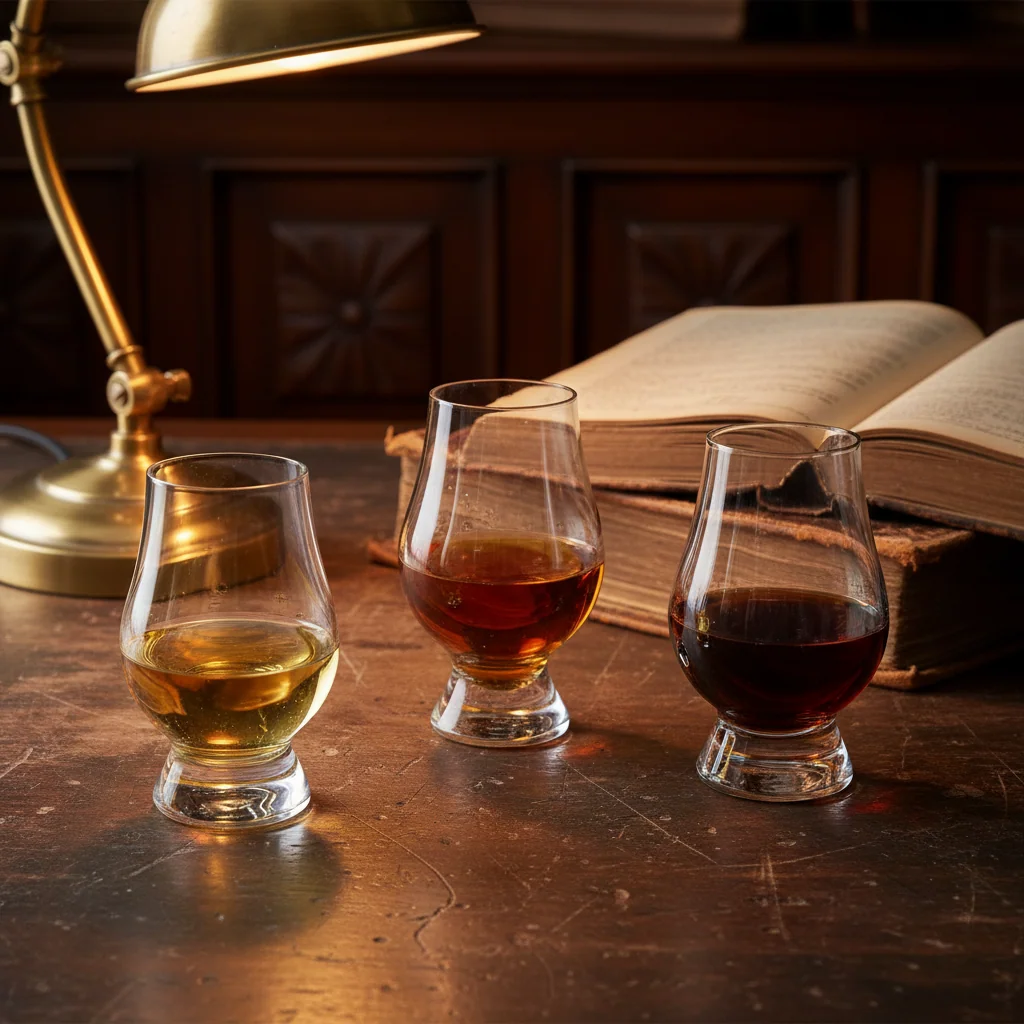
Pour a small measure — 25ml or so — into the best glass you have. If you own a Glencairn or tulip glass, use it. If not, a small wine glass works. Avoid a wide tumbler if you can.
Smell it before you sip it. Take a small first sip and let your palate adjust. The second and third sips are where you actually start tasting what is there. Try it with a few drops of water after you have had it neat. Note what changes.
And then just... keep going. If you like it, note what you like about it so you can find similar bottles. If you do not like it, that is information too — now you know one style to avoid and can try something from a different part of the map.
The Permission You Do Not Need (But I Am Giving You Anyway)
You are allowed to not like whiskey. You are allowed to prefer the cheap stuff to the expensive stuff. You are allowed to put cola in it if that is what makes it taste good to you. You are allowed to drink it any way you want, and anyone who tells you otherwise cares more about performing expertise than actually enjoying a drink.
The whole point of your first good bottle is that it is yours. Your taste. Your pace. Your rules.
Continue the voyage
How to Actually Taste Whiskey (Without Pretending)
A practical, no-nonsense guide to tasting whiskey properly — without the pretentious theatre.

Best Whiskey Under £30: 12 Bottles Worth Every Penny
12 genuinely great whiskeys under £30 — Scotch, Irish, and bourbon bottles that punch well above their price.
Scotch vs Irish vs Bourbon: What Actually Makes Them Different
The real legal, production, and flavour differences between Scotch, Irish whiskey, and bourbon — not the generic version.