Edinburgh to Glasgow: The Lowland Belt's Quiet Revolution
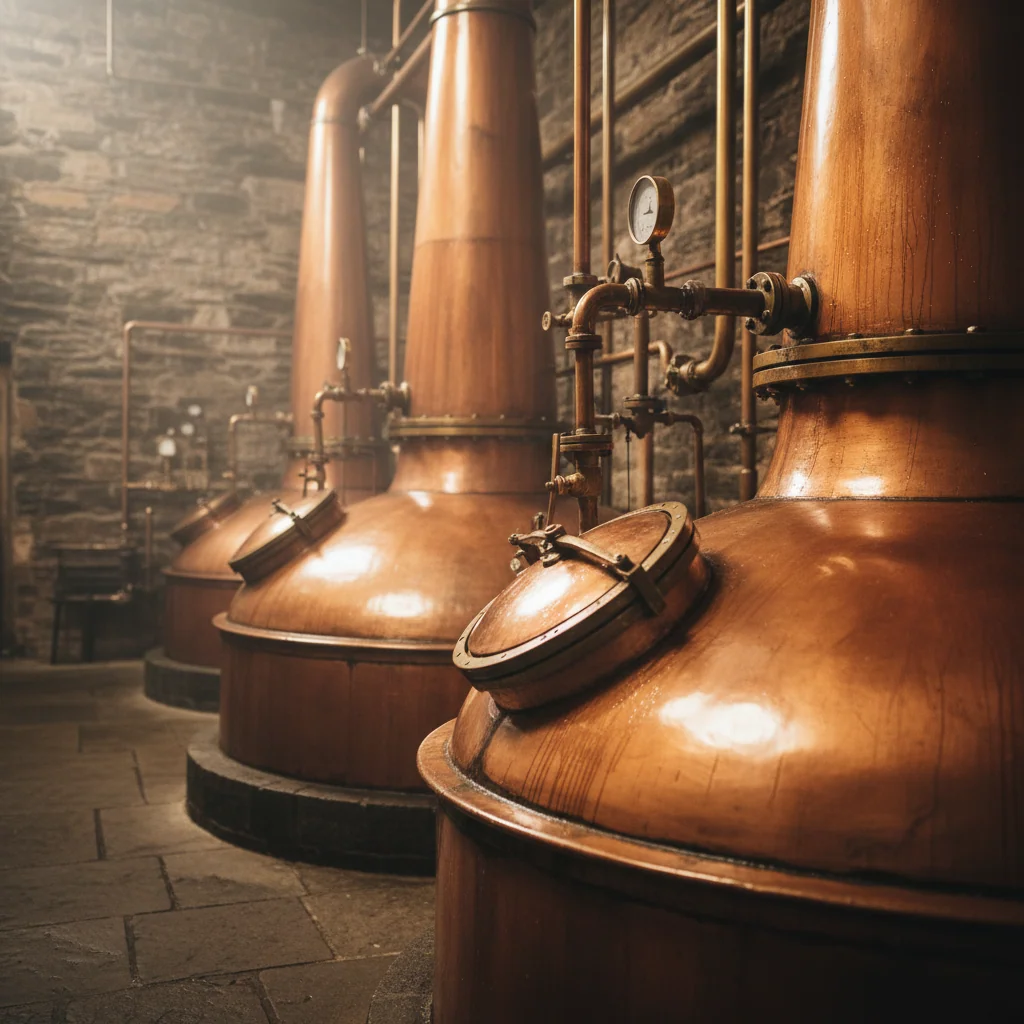
Rain on the Forth. The castle sits on its plug of volcanic rock above Princes Street, and somewhere below the Old Town, in a converted railway engine shed, copper is heating and spirit is condensing. Edinburgh smells of hops and coffee and wet sandstone. The whisky, when it comes, is lighter than you expected — and more interesting.
For decades, the Lowlands were Scotland's whisky afterthought. While Speyside and Islay hoarded the critical attention, Central Scotland's distilleries were dismissed as "light," "easy," "beginners' whisky." That was never entirely fair, and it certainly is not true now. Between Edinburgh and Glasgow, a new generation of distilleries has opened alongside the old guard, and the Central Belt has become one of the most dynamic whisky regions in Britain. Triple distillation, urban grain-to-glass operations, farm distilleries growing their own barley, and a revived legend or two for good measure.
Edinburgh: The Capital's New Stills
Start where the tourists are, then go where they are not. Holyrood DistilleryCentral ScotlandToursShop sits in a converted engine shed near the bottom of the Royal Mile, a short walk from the Scottish Parliament and Holyrood Park. Founded in 2019, it produces single malt, gin, and rum, and its approach is experimental — different yeast strains, unusual barley varieties, a willingness to try things that established distilleries would dismiss as unnecessary. The visitor experience is excellent and the location makes it the easiest distillery in Scotland to reach by public transport.
A mile north, Port of Leith DistilleryCentral ScotlandToursShop is Scotland's only vertical distillery, rising through a converted industrial building in Edinburgh's historic port area. The rooftop bar has views across the Firth of Forth. Their Lind & Lime gin has already established itself, and whisky is quietly maturing in casks — first releases are coming. The building alone is worth visiting.
Just outside Edinburgh, in the rolling farmland of East Lothian, Glenkinchie DistilleryCentral ScotlandTours has been making whisky since 1837. This is the Edinburgh Malt — a Diageo Classic Malt that serves as the official Lowland representative. The 12-year-old is grassy, floral, and gentle, the kind of whisky that works before dinner when anything heavily peated would overwhelm.
Glenkinchie Distillery
Glenkinchie 12 Year Old
Light gold in colour with cut grass, lemon zest, and honeysuckle on the nose. The palate is clean and cerealy — cream crackers, green apple, and a hint of ginger spice. The finish is short and crisp with a pleasant dryness. Textbook Lowland: elegant, restrained, and very easy to drink too fast.
Buy on The Whisky BarrelGlasgow: Stills on the Clyde
Glasgow's whisky story is a revival tale. The city once had dozens of distilleries. By 2000 it had none. Now it has two, and they are doing different things with the same city.
The Clydeside DistilleryCentral ScotlandToursShop occupies the former Pumphouse at Queen's Dock on the waterfront — a Victorian building with the kind of industrial grandeur that makes you wonder why more distilleries do not look like this. The visitor centre traces Glasgow's lost whisky heritage before you reach the stills. Their first single malt releases are appearing, and the location, right on the Clyde walkway near the Riverside Museum, makes it a natural stop.
The Glasgow DistilleryCentral ScotlandToursShop operates from a more industrial part of the city and produces the 1770 range — Glasgow's first single malt in over a century. They make it in three expressions: Original (unpeated, fruity), Peated (unusual for a Lowland), and Triple Distilled (smooth and approachable). The peated expression raised eyebrows when it launched. Peat from Glasgow? But it works — a gentle, earthy smoke that nods to the Highlands without leaving the city limits.
Between the Cities: The Heart of the Belt
The M8 motorway connecting Edinburgh and Glasgow is not scenic, but the distilleries scattered to its north and south are worth every detour.
Auchentoshan DistilleryCentral ScotlandToursShop sits just west of Glasgow, near the Erskine Bridge, and holds a unique position in Scotch whisky: it is the only distillery that triple-distils every single drop of spirit — a process that connects it stylistically to Irish pot still whiskey. If you want to understand how production method shapes flavour, the Scotch vs Irish vs Bourbon comparison is worth reading before you visit. This Lowland tradition — borrowed from Ireland — produces a lighter, smoother new make that takes to wood beautifully. The Three Wood expression passes through bourbon, oloroso sherry, and Pedro Ximenez casks in sequence, building layer upon layer of sweetness and spice.
Auchentoshan Distillery
Auchentoshan Three Wood
Dark amber with toffee, brown sugar, and hazelnut on the nose. The palate is rich and layered — dried fruit, dark chocolate, orange peel, and cinnamon from the triple-cask maturation. Despite the sweetness there is enough tannic grip to keep it balanced. The finish is long and warming with a lingering fruitcake character. Remarkably complex for a Lowland malt.
Buy on The Whisky ShopGlengoyne DistilleryCentral ScotlandToursShop straddles the Highland Line north of Glasgow — quite literally. The stills sit on the Highland side and the warehouses on the Lowland side, which means it is officially a Highland distillery making spirit that tastes like a Lowlander. The slowest distillation in Scotland, no peat, and generous sherry cask use produce a style that is honeyed, toffee-rich, and immediately likeable. The tours are among Scotland's best, and the waterfall setting is gorgeous.
In Falkirk, Rosebank DistilleryCentral ScotlandToursShop has risen from the dead. This legendary triple-distilled Lowland distillery went silent in 1993, and for three decades its remaining bottles became increasingly scarce and expensive. Ian Macleod Distillers spent years painstakingly restoring the site, and the distillery is now producing spirit again. Old Rosebank was floral, perfumed, and delicate — widely considered the finest Lowland malt ever made. Whether the new spirit can live up to that memory is the most interesting question in Scottish whisky right now.
South and East: Farm and Border
Lochlea DistilleryCentral ScotlandToursShop brings the story full circle — back to the land. This Ayrshire farm distillery sits on the very ground where Robert Burns once lived and worked, and they grow their own barley on site. The Our Barley expression is clean, cereal-forward, and honest. No smoke, no sherry-bomb theatrics, just well-made malt that tastes of where it comes from.
Further south, Annandale DistilleryCentral ScotlandToursShop in Dumfries and Galloway was originally founded in 1836 and lay silent for over a century before being revived in 2014. They produce two distinct styles: Man O'Words (unpeated) and Man O'Sword (peated), named after two famous locals — Robert Burns and Robert the Bruce. The restored distillery buildings are handsome, and the combination of peated and unpeated from a single site gives visitors a useful lesson in how peat transforms the same spirit.
The Borders DistilleryCentral ScotlandToursShop in Hawick is the first Scotch whisky distillery in the Scottish Borders for almost two hundred years. Their first single malt releases are appearing, and the mere existence of a working distillery in the Borders feels like a historical wrong being corrected.
Planning Your Visit
Getting there: Edinburgh and Glasgow have international airports and are connected by frequent trains (50 minutes). If you are travelling up from London, the Caledonian Sleeper arrives at Edinburgh Waverley or Glasgow Central in the early morning — a good option if you want to make the most of your first day. Most Central Belt distilleries are within an hour's drive of one city or the other, and several Edinburgh distilleries (Holyrood, Port of Leith) are reachable on foot or by bus.
How long: Three to four days to do it properly. Edinburgh's distilleries and Glenkinchie fill one day. Glasgow's distilleries plus Auchentoshan fill another. The surrounding distilleries — Glengoyne, Rosebank, Deanston, Lochlea — need one or two more.
Best time: Year-round. This is not the Hebrides — ferries and weather are not a factor. Edinburgh in August is packed with the Festival but the distilleries are quieter because tourists are at comedy shows.
Getting around: Trains and buses work for the urban distilleries. For the rural ones — Glenkinchie, Lochlea, Annandale — you need a car. Designated drivers earn their drinks in heaven.
Where to stay: Edinburgh or Glasgow as a base, depending on your priorities. Both cities have excellent accommodation at every price point, and the distilleries radiate outward from there. For a budget-friendly approach, chain hotels near Edinburgh Waverley or Glasgow Central keep you close to transport links. The Craigellachie Hotel is not here — but if you want a proper whisky hotel experience, the Crossbasket Castle near Blantyre or any number of Glasgow boutique hotels will do the job.
See all Central Scotland distilleries on the map in the Chart Room.
Continue the voyage
The Speyside Voyage: 53 Distilleries, One River Valley
A data-driven guide to all 53 Speyside distilleries — from Glenfiddich to hidden workhorse malts that power Scotland's greatest blends.
Campbeltown & the West: Scotland's Forgotten Whisky Coast
Campbeltown's legendary trio, Oban's town-centre Classic Malt, and the wild new distilleries of Ardnamurchan and Morvern — Scotland's western coast is whisky's best-kept open secret.
The 15 Best Distillery Tours in the UK & Ireland
We ranked the 15 distillery tours actually worth your time across Scotland, England, Wales, and Ireland — from Islay icons to hidden Welsh gems.