Best Bourbons for Scotch Drinkers: A Flavour Bridge Guide

Crossing the Atlantic from Scotch to bourbon is one of the most rewarding journeys in whisky, but it's not without navigational hazards. The first bourbon you try, if poorly chosen, can send you back to Speyside permanently. The right first bourbon, matched to what you already love in Scotch, can open a whole new hemisphere of flavour.
This isn't about converting you. It's about expanding the map.
Understanding the Key Difference
Scotch single malt is almost always matured in previously used casks — predominantly ex-bourbon barrels from the US, plus ex-sherry, ex-wine, and other cask types. The wood has already given its most aggressive flavours to its previous occupant, so the spirit picks up subtler notes: vanilla, gentle oak, fruit, spice.
Bourbon, by law, must be matured in brand-new charred American oak containers. The spirit hits virgin wood that has never held anything before. The result is a massive extraction of vanilla, caramel, toasted coconut, and wood tannin. The effect can be beautiful — but it's categorically different to what Scotch maturation delivers.
The sweetness profile also differs in origin: bourbon's corn base (minimum 51%) adds an inherent grain sweetness that Scotch malt doesn't have. The flavour isn't complex in the Speyside sense — it's big, rounded, and direct.
The Speyside Drinker's Path
If your reference points are Glenlivet 12, Balvenie DoubleWood, or Glenfiddich 15, you're drawn to fruit, honey, and a certain creamy approachability. Wheated bourbons — which substitute wheat for rye in the secondary grain — are your natural landing zone.
Maker's Mark — Around £30
Maker's Mark is the most famous wheated bourbon and the most logical starting point. Soft, approachable, with dominant vanilla, honey, caramel, wheat bread, and a smooth finish. At 45% it has enough presence to feel substantial. Not the most complex bourbon in Kentucky, but a gentle, well-made introduction.
Star Hill Farm
Maker's Mark
Vanilla, honey, caramel, wheat bread, soft finish. Approachable and smooth — the wheated bourbon that Speyside drinkers tend to click with immediately.
Buy on The Whisky ShopW.L. Weller Special Reserve — Around £35
Weller is the approachable face of Buffalo Trace's wheated bourbon programme — the same recipe as Pappy Van Winkle, minus the stratospheric price. Richer than Maker's Mark, with more dried fruit, toffee, and a subtle oak complexity that rewards a drop of water. Often hard to find in UK retail but worth the search.
Larceny Small Batch — Around £32
Heaven Hill's wheated offering punches above its price. Sweet, with a distinctive bread-and-butter note alongside the vanilla and caramel, and a finish that's notably longer than you'd expect at this price point.
The Highland and Sherried Scotch Drinker's Path
If you drink GlenDronach, Glenfarclas, or Aberlour — if you like your whisky robust, sherried, and unapologetically flavoured — you want high-rye bourbons. Rye adds spice, pepperiness, and complexity that cuts through the sweetness.
Four Roses Small Batch — Around £35
Four Roses is one of the most interesting distilleries in Kentucky, using five different yeast strains and two mashbills to create ten separate whiskies that are blended into their expressions. Small Batch combines four of these, resulting in a whisky with genuine complexity — dried fruit, rose, spice, vanilla, toasted oak, and a long finish.
Four Roses
Four Roses Small Batch
Dried fruit, rose, cinnamon spice, vanilla, toasted oak. One of the most complex standard bourbons available in the UK.
Buy on The Whisky ShopKnob Creek 9 Year Old — Around £40
Jim Beam's premium range produced something genuinely excellent with Knob Creek 9. Rich, full-flavoured, oaky, with dark cherry, vanilla, caramel, and a long warming finish. Bottled at 50%, it has the weight that heavy Scotch drinkers need to feel satisfied.
Bulleit Bourbon — Around £30
High rye content (28%, near the legal maximum) gives Bulleit a spicy, dry character that cuts through the bourbon sweetness. Vanilla and honey on the nose, but persistent pepper and oak on the palate that prevent it ever feeling cloying. Excellent in cocktails and perfectly good neat.
The Islay Drinker's Path
You're used to being hit hard. Bourbon won't give you peat smoke, but cask strength expressions deliver power, and certain bourbons have a boldness that resonates with Islay instincts.
Wild Turkey Rare Breed — Around £45
Bottled at cask strength (around 58%), Rare Breed is one of the best-value cask strength bourbons in the UK. Big, oaky, spicy, with vanilla and orange peel cut through by serious wood tannin. It rewards water — add a few drops and watch it open up.
Wild Turkey
Wild Turkey Rare Breed
Cask strength power: vanilla, orange peel, dark oak, cinnamon, serious tannin. Add water. Rewards patience.
Buy on The Whisky BarrelElijah Craig Barrel Proof — Around £55
Elijah Craig's barrel proof releases (three batches annually, labelled A, B, C) are among the most critically admired bourbons in production. Each batch differs slightly, but all share rich caramel, dark chocolate, toasted oak, dried fruit, and a finish of extraordinary length. If you've been hardened by Ardbeg Ten, this is the bourbon for you.
Making the Comparison
The most useful exercise for Scotch drinkers new to bourbon: buy a bottle of a Scotch you know well, and the most analogous bourbon from the list above. Taste them side by side, neat, then with water. The comparison reveals more about what both spirits actually taste like than either in isolation.
You may end up preferring the Scotch. You may discover that bourbon does certain things better. Most likely, you'll find they're different tools for different moods — and that having both on the shelf is the obvious solution.
Explore the fundamental differences in Scotch vs Irish vs Bourbon and learn more about how production differences create flavour in bourbon vs rye explained.
Continue the voyage
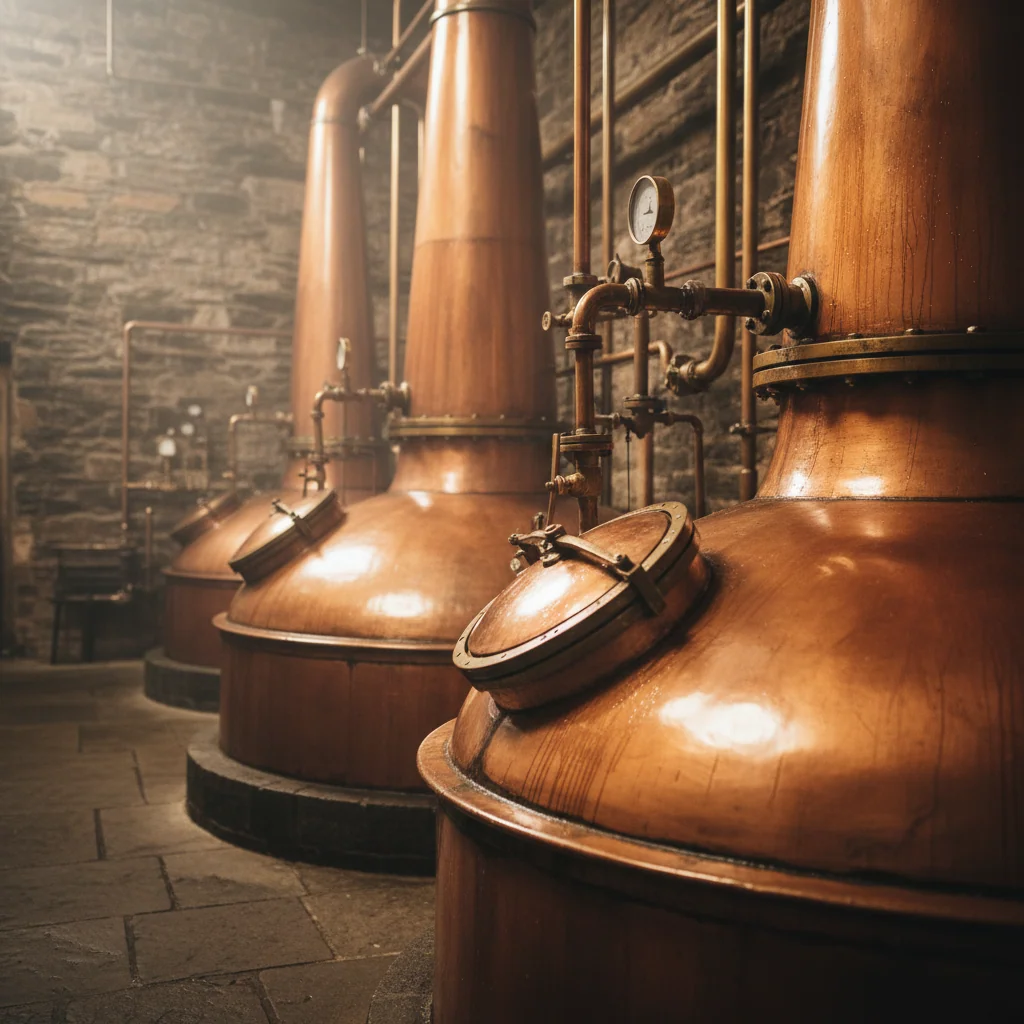
Scotch vs Irish vs Bourbon: What Actually Makes Them Different
The real legal, production, and flavour differences between Scotch, Irish whiskey, and bourbon — not the generic version.
Bourbon vs Rye Whiskey: Rules, Flavours, and Which to Drink When
The difference between bourbon (51% corn, new charred oak) and rye (51% rye grain) — legal rules, flavour profiles, and the best bottles for each.
Best Whiskey Between £30 and £60: The Sweet Spot
10 brilliant whiskeys in the £30-60 range — the price bracket where quality actually lives. Scotch, Irish, bourbon, and Japanese picks with real tasting notes.
Single Malt vs Blended: The Snobbery Is Wrong
Single malt doesn't mean better. Blended whisky is an art form — and some of the best drams on earth are blends. Time to drop the snobbery.