Irish vs Scotch: 5 Head-to-Head Tastings
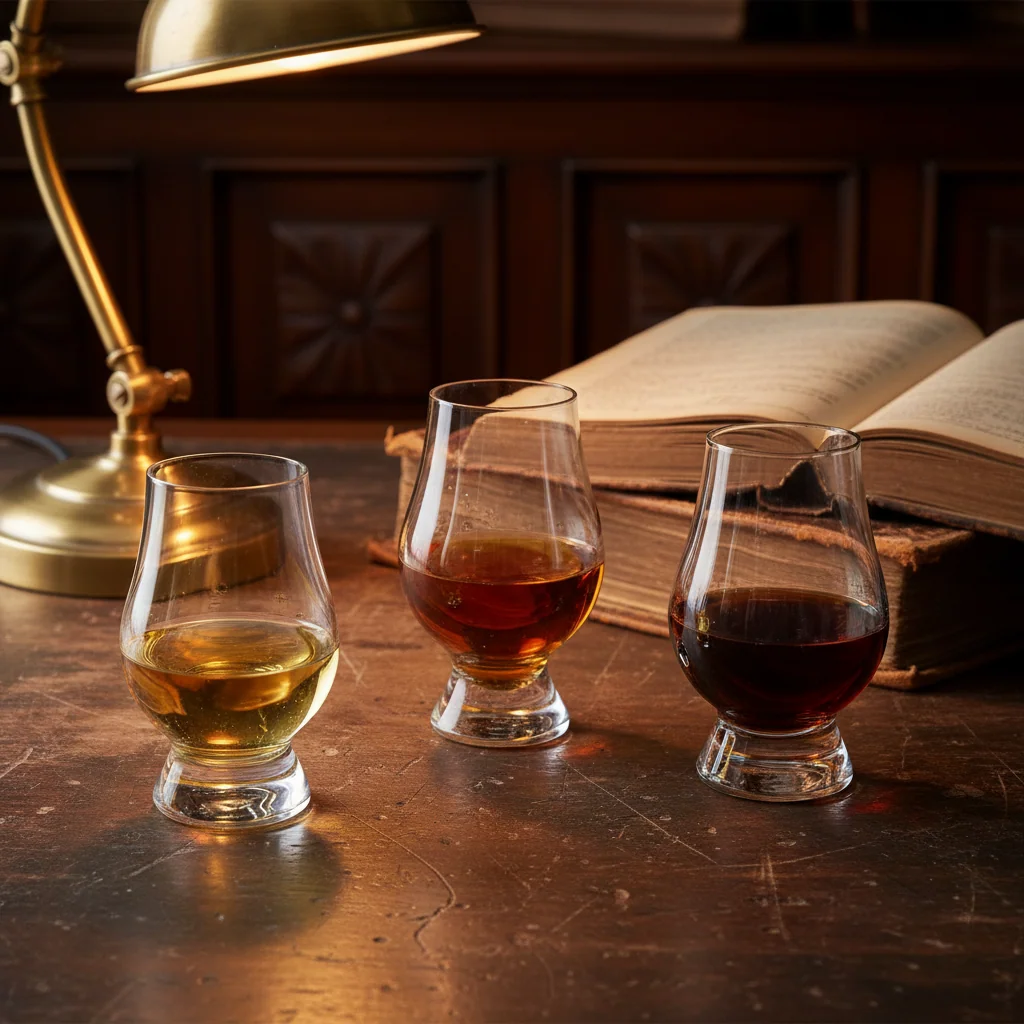
Captain's log. Two nations, separated by a narrow sea and a single letter, both claiming they invented the stuff. Tonight we settle nothing — but we're going to have a very good time trying. Five rounds. Five price-matched pairs. One glass of water between them.
The Irish vs Scotch debate generates more heat than a kiln at Kilbeggan, and most of it misses the point. These aren't rival products — they're cousins with different accents. Irish whiskey tends towards triple distillation and a smooth, approachable character. Scotch leans into double distillation, regional terroir, and a wider flavour spectrum. But exceptions exist everywhere, which is exactly why blind tastings are so revealing.
Round 1: The Everyday Sippers (£25-£30)
Jameson vs Monkey Shoulder
Jameson (£23, 40%) is the world's most popular Irish whiskey for a reason. Triple-distilled, blended, smooth as a harbour at dawn. You get light vanilla, green apple, a whisper of pot still spice, and a clean finish that practically evaporates. It's engineered to offend nobody, and it succeeds.
Monkey Shoulder (£25, 40%) is a blended malt Scotch — meaning it's a blend of three single malts (Glenfiddich, Balvenie, and Kininvie). It's richer than Jameson immediately: toffee, orange zest, a bit of malty cereal, and a slightly longer finish with a trace of oak.
Verdict: Monkey Shoulder takes this round. At almost the same price, it delivers more flavour without sacrificing drinkability. Jameson is perfectly fine, but "perfectly fine" doesn't win head-to-heads.
William Grant & Sons
Monkey Shoulder Blended Malt
Toffee, orange zest, malty cereal, vanilla, with a medium oaky finish. A blended malt that drinks well above its price point.
Buy on The Whisky ShopRound 2: The Sherry-Matured Middleweights (£40-£50)
Redbreast 12 vs GlenDronach 12
Now we're talking. This is where both traditions start flexing properly.
Redbreast 12 (£45, 40%) is a single pot still Irish whiskey — a style unique to Ireland that uses a mix of malted and unmalted barley. It's matured in a combination of bourbon and sherry casks, and the result is extraordinary for the price: rich dried fruit, toasted oak, Christmas cake spice, a creamy mouthfeel, and a finish that lingers like a good story.
GlenDronach 12 (£40, 43%) is a Highland single malt matured entirely in Pedro Ximenez and Oloroso sherry casks. It's one of the most heavily sherried whiskies at this price point: dark chocolate, stewed plum, walnut, and a warming, slightly tannic finish.
Verdict: This one's genuinely tight. Redbreast 12 has more elegance and complexity. GlenDronach 12 has more raw sherry power. Gun to my head, Redbreast takes it by a nose — that pot still texture is something Scotch simply can't replicate.
Midleton
Redbreast 12 Year Old
Dried fruit, toasted oak, Christmas cake spice, creamy pot still texture, with a long warm finish. Ireland's finest at this price.
Buy on The Whisky ShopRound 3: The Refined Contenders (£45-£55)
Green Spot vs Oban 14
Green Spot (£45, 40%) is another single pot still Irish, originally created for the Mitchell family's wine merchants in Dublin. It's matured in a mix of bourbon and sherry casks, giving fresh orchard fruit, toasted barley, honey, gentle clove, and a medium-length finish. It's beautifully balanced — nothing shouts, everything harmonises.
Oban 14 (£55, 43%) sits at the gateway between Highland and Island Scotch, and it tastes exactly like that sounds. Sea salt, heather honey, dried orange, a wisp of peat smoke, and a dry, slightly briny finish. It's one of the most food-friendly Scotch whiskies ever made.
Verdict: Oban 14 wins this round on sheer personality. Green Spot is lovely — genuinely lovely — but Oban tells you a story about place. You can taste the harbour. That specificity of terroir is where Scotch has an undeniable edge.
Oban
Oban 14 Year Old
Sea salt, heather honey, dried orange, gentle peat smoke, dry briny finish. A gateway between Highland and Island character.
Buy on The Whisky ShopRound 4: The Heritage Picks (£30-£35)
Powers Gold Label vs Highland Park 12
Powers Gold Label (£28, 43.2%) is the whiskey Dublin drank for two hundred years before Jameson took over the world. It's pot still Irish with more muscle than most — cinnamon, toffee apple, toasted grain, a peppery kick, and a dry finish. It's bottled at a slightly higher strength, which gives it genuine presence.
Highland Park 12 (£35, 40%) is an Orkney single malt that somehow manages to be smoky, sweet, and floral all at once. Heather honey, gentle peat, dried fruit, a touch of orange blossom, and a long, warming finish. It's often called the greatest all-rounder in Scotch, and that reputation is earned.
Verdict: Highland Park 12 takes it. Powers is an underappreciated gem — more character than Jameson in every dimension — but Highland Park's combination of smoke, sweetness, and complexity at this price is almost unfair.
Highland Park
Highland Park 12 Year Old
Heather honey, gentle peat, dried fruit, orange blossom, long warming finish. The great all-rounder.
Buy on The Whisky ShopRound 5: The Peated Wildcard (£40-£50)
Connemara Peated vs Talisker 10
This is the match most people don't see coming. Yes, Ireland makes peated whiskey.
Connemara Peated (£35, 40%) is a double-distilled peated single malt from the old Cooley Distillery. The peat here is gentler than Islay smoke — more campfire and dried herbs than iodine and tar. Behind the smoke there's lemon, honey, and a slightly oily texture. It's unique.
Talisker 10 (£38, 45.8%) is the maritime peat monster from the Isle of Skye. Black pepper is the signature — it hits the tongue like a wave breaking over rocks. Salt, smoke, dried chilli, sweet malt underneath, and a finish that goes on and on. It's bottled at a punchy 45.8%, which gives it real authority.
Verdict: Talisker 10 wins, but Connemara deserves enormous credit for even making this a contest. Talisker's combination of pepper, salt, and smoke is one of the most distinctive flavour profiles in all of whisky. If you haven't tried Connemara though, you're missing one of the most interesting things happening in Irish whiskey.
Talisker
Talisker 10 Year Old
Black pepper, sea salt, smoke, dried chilli, sweet malt underbelly. Maritime peat at its most thrilling.
Buy on The Whisky ShopFinal Score: Scotch 4, Ireland 1
But that scoreline flatters Scotch slightly. Redbreast 12 was the best individual whisky in the whole tasting. The Irish contenders are consistently smooth, approachable, and well-crafted. Where Scotch pulls ahead is in range — the sheer diversity of flavour profiles across regions gives it more weapons in a head-to-head format.
From the crew
Run this tasting yourself with friends. Buy all ten bottles, pour them blind, and keep score. You'll be surprised how often the assumptions fall apart when the labels come off.
The real takeaway isn't that one tradition beats the other. It's that both are making extraordinary whisky right now, and if you're only drinking one side of the Irish Sea, you're missing half the story.