Stop Collecting, Start Drinking: Why Open Bottles Beat Sealed Ones
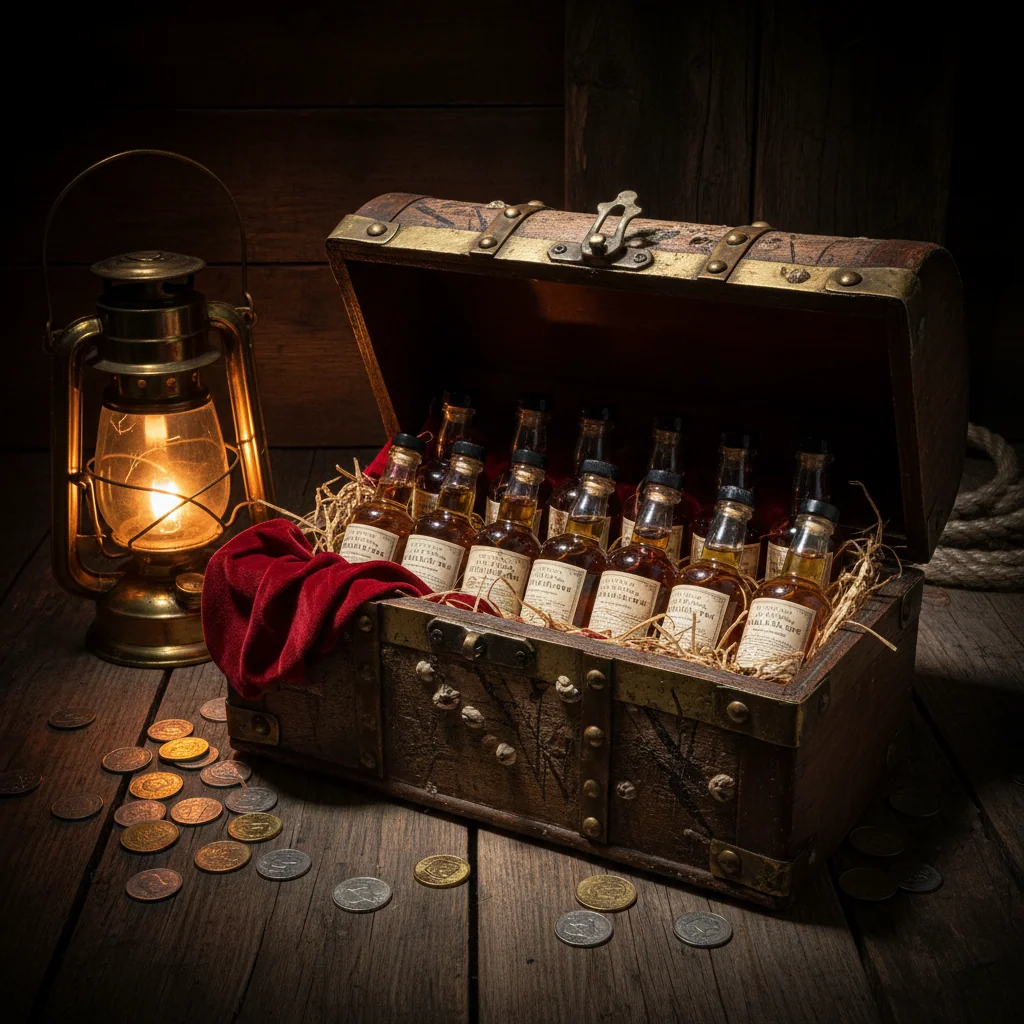
Inventory inspection, the captain's cabin: fourteen bottles in the rack, eleven of them sealed. Three have been sealed for over a year. One was a birthday gift. One was a holiday purchase. One was bought because it was "limited edition" and seemed important at the time. None of them have done anything useful since they arrived. They sit there, gathering dust and quiet self-importance, while the three open bottles do all the actual work.
There is a disease spreading through whiskey culture, and it does not come from a bad cask or a dodgy blending decision. It comes from the idea that whiskey bottles are more valuable sealed than open. That the correct relationship with a good bottle is to own it, photograph it, shelve it, and protect it from the terrible fate of being drunk.
This is, to put it plainly, nonsense.
The Sealed Bottle Problem
Here is a question that reveals more about whiskey culture than any tasting note ever will: how many sealed bottles do you have at home right now?
If the answer is more than two or three, ask yourself why. What are you waiting for? A special occasion? A worthy guest? The right mood? The heat death of the universe?
The sealed bottle problem starts small. You buy a bottle you really like and think: this is too good for a Tuesday. You will save it. Then you buy another one — limited edition, nice packaging — and think: this might be worth something one day. Then someone gives you a bottle for Christmas and you shelve it because you are "not ready" for it yet. Before long, you have a shelf of whiskey that exists purely as decoration, each bottle waiting for a moment that never quite arrives.
Meanwhile, you are drinking the same everyday bottle because you do not want to "waste" the good stuff.
This is backwards. Whiskey is made to be drunk. Every distiller, blender, and cooper who contributed to that bottle did so with the assumption that someone would eventually open it, pour it, smell it, taste it, and experience the thing they spent years creating. A sealed bottle honours none of that work. It is a trophy, not a tribute.
Whiskey Is Not Wine
Part of the confusion comes from borrowing wine logic. Wine continues to develop in the bottle. A great Bordeaux genuinely improves over decades in a cellar. The tannins soften, the flavours integrate, and the wine becomes something it was not when it was bottled.
Whiskey does none of this. The moment spirit is bottled, it stops aging. A 12-year-old whisky bottled in 2015 is still a 12-year-old whisky in 2035. It has not become a 32-year-old. It has become a 12-year-old that has been sitting in glass for twenty years, which is not the same thing at all.
Glass is inert. It does not interact with the spirit. The whiskey in a sealed bottle today will taste virtually identical to the whiskey in that sealed bottle in ten years' time, assuming you stored it upright and out of direct sunlight. You are not cellaring an improving asset. You are storing a static one.
So what exactly are you waiting for?
The Investment Illusion
"But it will be worth more in the future." Will it? For a tiny percentage of bottles — limited releases from closed distilleries, certain cask-strength single cask bottlings, expressions from distilleries with cult followings — yes, prices do rise on the secondary market. Collectors have made real money on rare Macallan, Port Ellen, and Karuizawa bottles.
But those are the exceptions, not the rule. The vast majority of whiskey does not appreciate meaningfully. That "limited edition" you bought? So did 15,000 other people. That travel retail exclusive? It was exclusive to every airport in Europe. The market is flooded with bottles that were marketed as collectible but are worth roughly what you paid for them, minus the years of enjoyment you denied yourself by not opening them.
If you genuinely want to invest in whiskey as an alternative asset, there are specialist platforms and bonded warehouses for that. It is a legitimate, if niche, investment strategy. But it involves buying casks or cases from brokers, storing them properly, and selling through auction houses. It does not involve keeping a bottle of Lagavulin on your shelf and pretending it is a pension.
The Acquisition Trap
There is something psychologically satisfying about buying a bottle. The research, the hunt, the moment of purchase, the unboxing, the shelf placement. It feels like accomplishment. And for a particular type of person — completist, collector, hunter-gatherer — the acquisition is more rewarding than the consumption.
This is the trap. The dopamine hit comes from buying, not from drinking. The collection grows because collecting feels productive, while opening a bottle feels like destroying something. Every sealed bottle is a perfect possibility. Every open bottle is a diminishing reality.
But here is the thing: whiskey is not Schrodinger's dram. The liquid inside that sealed bottle is not simultaneously the best and worst whiskey you have ever tasted. It is a fixed thing, waiting for you to find out what it actually tastes like. And finding out — the pouring, the nosing, the first sip, the surprise of what it does on your palate — is the entire point. That moment of discovery is what you paid for. Not the bottle. Not the label. Not the shelf presence.
How to Break the Habit
If you recognise yourself in any of this — and most whiskey enthusiasts will, at least a little — here is a practical framework for recovery:
The Two Bottle Rule: Never have more than two sealed bottles at home. If you buy a new one, open one. This creates a natural cycle of acquisition and enjoyment rather than pure accumulation.
The Tuesday Test: If you would not open it on a random Tuesday evening, ask yourself why you bought it. Special occasions are a myth. Tuesday is a special occasion if you have good whiskey and nowhere to be tomorrow.
The Friend Pour: The best use for a bottle you are hoarding is to pour it for a friend who has never tried anything like it. Their reaction — surprise, delight, confusion, that slow widening of the eyes — is worth more than any future auction price. Whiskey is social. Drinking it alone from a shelf is the loneliest possible relationship with alcohol.
The Death Audit: This is morbid but effective. If you were hit by a bus tomorrow, what would happen to your sealed bottles? Your family would either sell them below market value, give them to someone who does not appreciate them, or throw them away. None of these outcomes are what you intended when you bought them. The only way to guarantee the outcome you wanted — the one where someone who loves whiskey gets to taste exceptional liquid — is to be that person, now, while you can.
From the crew
Worried about an open bottle going bad? Do not be. Whiskey at 40%+ ABV is remarkably stable. An opened bottle stored upright, out of direct sunlight, and with the cap on tightly will be fine for a year or more. Once you are below the halfway mark, the increased air exposure speeds up oxidation slightly — drink it within six months. But honestly, if a half-empty bottle of good whiskey lasts six months in your house, you are still not drinking enough of it.
The Real Collection
The best whiskey collection is not on a shelf. It is in your memory. The Laphroaig you shared with a friend during a thunderstorm. The Redbreast your father poured on Christmas Day. The strange, wonderful independent bottling from a distillery you had never heard of, opened on a whim on an unremarkable Thursday, that turned out to be one of the best things you have ever tasted.
Those moments do not happen with sealed bottles. They happen with open ones. Pour something tonight. You do not need a reason. The reason is: you have whiskey, and it wants to be drunk.
Continue the voyage
When Expensive Whiskey Is a Waste of Money
Diminishing returns, celebrity cash grabs, and overpriced NAS releases — when paying more gets you nothing extra, and when it genuinely does.
9 Whiskey Myths That Need to Die
From 'older is always better' to 'ice ruins whiskey' — nine persistent myths that are keeping you from actually enjoying your dram.
Building a Whiskey Home Bar: The 8 Bottles That Cover Everything
The 8 bottles that give you maximum range at home — one Speyside, one Islay, one Highland, one Irish, one bourbon, one Japanese, one blend, and one wild card.