Closed, Silent, and Lost: The Distilleries That Disappeared
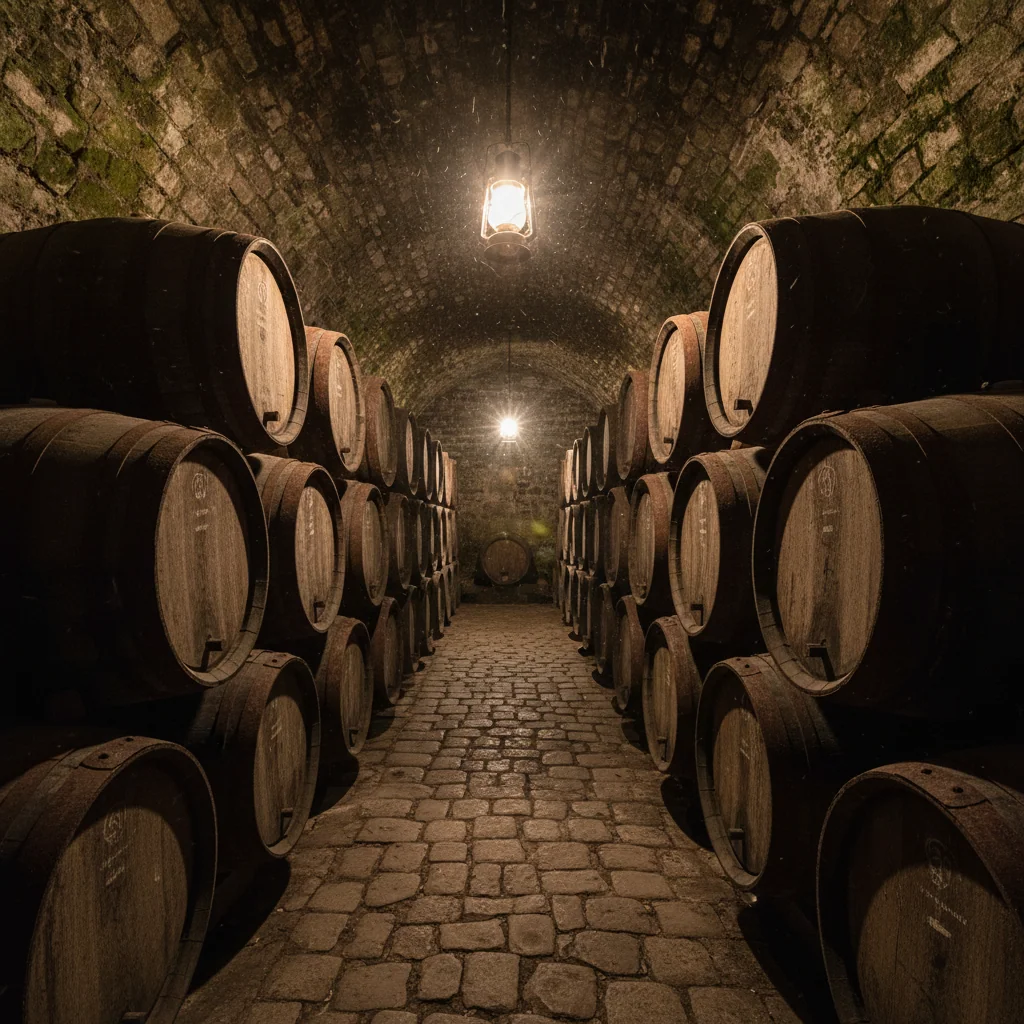
The last entry in the production log is always the hardest to read. A date, a volume, a signature — and then nothing. No more pages. The stills go cold, the maltings fall quiet, and the only sound is rainwater finding its way through a roof that nobody is maintaining anymore. Whisky distilleries are not supposed to die. But they do.
The history of Scotch and Irish whisky is littered with closures. For every distillery operating today, there are two or three that did not make it — victims of economic downturns, changing tastes, corporate restructuring, or simple bad luck. Some closed for decades and came back. Some are gone forever, their whisky surviving only in a dwindling supply of increasingly expensive bottles. A few exist in a strange limbo called "silent" — mothballed but not demolished, their equipment intact, waiting for someone to light the fires again.
This is about the ones that disappeared, and what they left behind.
The Language of Loss
The whisky industry uses specific terms for distilleries that are no longer producing, and they mean different things:
Active — producing spirit. Business as usual.
Silent (or "mothballed") — production has stopped, but the distillery has not been dismantled. The stills are still there. The equipment could, in theory, be restarted. Some distilleries have been silent for years or decades before restarting.
Closed — production has permanently ceased. The equipment may have been removed, the buildings repurposed or demolished. No realistic prospect of whisky production resuming.
Lost — the distillery is gone entirely. Buildings demolished, site redeveloped, sometimes no physical trace remaining. The whisky exists only in bottles and casks already filled.
The distinction between "silent" and "closed" is important because silent distilleries can come back. Some of the greatest resurrection stories in whisky history started with a mothballed distillery and someone with enough money and stubbornness to bring it back.
The Modern Casualties
Dublin Liberties Distillery — Silent (2025)
Dublin Liberties DistilleryEast IrelandToursThe most recent casualty. Dublin Liberties, founded in 2018 as part of the Irish whiskey renaissance, was put into silent mode in May 2025 by owner Quintessential Brands. The visitor centre closed. Production stopped. Offices still operate from the site, but no spirit is flowing.
Dublin Liberties was a high-profile project in the heart of Dublin's historic distilling quarter — the Liberties area that once produced the majority of Ireland's whiskey output. Its closure is a reminder that heritage and a good postcode are not enough on their own. The craft distillery boom has created overcapacity in some markets, and not every project has the financial stamina to wait for its own whisky to mature.
Whether Dublin Liberties restarts depends on whether Quintessential Brands or a future buyer sees value in the site and the brand. The equipment is still there. The story is not necessarily over.
Speyside Distillery — Closed (2024)
Speyside DistillerySpeysideThe confusingly named Speyside Distillery (not to be confused with the Speyside region itself) closed in late 2024. Founded in 1990 near Kingussie — which is technically in the Cairngorms, not in Speyside proper — the distillery had a troubled history from the start. Construction began in the 1960s but was not completed until 1990, and the operation never achieved the scale or brand recognition needed to compete with its neighbours.
The site has been acquired by Glasgow Whisky for a new venture called Glen Tromie distillery. So while the Speyside Distillery name dies, the physical infrastructure may live on in a new form. The remaining casks of Speyside single malt will gradually become collector's items — though given the distillery's limited fame, prices are unlikely to reach the stratosphere.
The Legendary Closures (and Resurrections)
Port Ellen — Closed 1983, Reopened 2024
Port Ellen's story is the most dramatic in Scotch whisky. Founded in 1825 on the south coast of Islay, it operated for over 150 years before Diageo's predecessor (DCL) closed it in 1983 during a catastrophic industry downturn. The stills were removed. The maltings continued operating (supplying peated malt to other Islay distilleries), but the distillery itself was dead.
What happened next was unexpected. The remaining casks of Port Ellen single malt, released in Diageo's annual Special Releases series from 2001 onwards, became some of the most sought-after and expensive bottles in Scotch whisky. Bottles that might have sold for £30 in the 1990s now command four-figure prices at auction. The rarer the whisky became, the more legendary Port Ellen's reputation grew. Death, it turned out, was the best marketing campaign Port Ellen ever had.
Diageo announced the reopening in 2017 and the new Port Ellen distillery produced its first spirit in 2024, forty-one years after the last drop ran. The new stills are not replicas of the originals — they are a completely new design, intended to produce a spirit that references but does not copy the original Port Ellen character. Whether the new whisky can live up to four decades of accumulated mythology is the most interesting question in Scotch whisky right now.
Brora — Closed 1983, Reopened 2021
Brora and Port Ellen were closed in the same year, by the same company, for the same reasons. Brora (originally called Clynelish until 1975, when a new Clynelish distillery was built next door) sits on the Sutherland coast in the far north of Scotland. Like Port Ellen, its remaining casks became wildly collectible — Brora's rich, waxy, sometimes heavily peated character found a devoted following among whisky enthusiasts.
Diageo reopened Brora in 2021 after a meticulous restoration that preserved the original Victorian distillery buildings. The reopening was handled with more reverence than most distillery projects — they even located and reinstated the original worm tubs (copper coil condensers) that contribute to Brora's distinctive character. First releases of the new-make spirit have been promising, but true Brora single malt (aged a minimum of three years) from the new operation is only now becoming available.
The old stock — Brora 30, 35, and 40 Year Olds from Diageo's Special Releases — remains among the most expensive Scotch whisky on the market. A bottle of Brora 40 Year Old can fetch £5,000 or more. The reopening has not dampened demand for the original; if anything, it has increased awareness and pushed prices higher.
Rosebank — Closed 1993, Reopened 2024
Rosebank was Scotland's finest Lowland distillery — a claim few would argue with. Located in Falkirk, it produced a triple-distilled single malt of extraordinary delicacy: floral, grassy, with a waxiness that reminded people of fine linen. When United Distillers closed it in 1993, the loss was felt keenly by people who cared about Lowland whisky.
The site sat derelict for over two decades. Part of the building was damaged by fire. A section of the site was sold for development. It seemed like Rosebank was lost for good.
Then Ian Macleod Distillers — the independent bottlers behind Glengoyne and Tamdhu — acquired the remaining buildings and the brand in 2017. What followed was one of the most ambitious restoration projects in whisky history: rebuilding the distillery within the surviving structures, reinstating triple distillation, and recreating the Rosebank character using historical production records. The restored distillery opened in 2024.
Ian Macleod released remaining casks of the original Rosebank spirit alongside the reopening — some of the last bottles from a distillery that had been closed for over thirty years. These are historical documents as much as they are whisky. The new Rosebank spirit will need to find its own identity, but the fact that the distillery exists at all is a minor miracle.
The Ones That Stayed Dead
Not every closed distillery gets a second chance. For every Port Ellen or Brora, there are dozens that closed and never came back. Here are some of the most significant losses:
St Magdalene (Linlithgow) — Closed 1983
Another victim of the 1983 cull. St Magdalene produced Lowland malt in the royal burgh of Linlithgow, between Edinburgh and Glasgow. The distillery buildings were converted into flats, and the site is now residential. Remaining bottles are rare and expensive — a piece of Scottish history that you can drink but cannot replace.
Littlemill — Closed 1992, Demolished 2004
One of the oldest distilleries in Scotland (claims of 1772 founding), Littlemill in Bowling on the Clyde was closed in 1992 and destroyed by fire in 2004. The site is now an industrial estate. Loch Lomond Group owns the brand and has released remaining stock as limited editions — some of the oldest Lowland whisky available, with prices to match.
Imperial — Closed 1998, Demolished 2013
A Speyside distillery near Carron that was closed, briefly reopened, closed again, and finally demolished to make way for the new Dalmunach distillery (owned by Chivas Brothers). Imperial whisky was rarely bottled as a single malt during its lifetime — most went into blends — but independent bottlings from the final years have a growing cult following.
Caperdonich — Closed 2002, Demolished 2010
Caperdonich sat across the road from Glen Grant in Rothes and was essentially built as a shadow distillery to increase Glen Grant's capacity. When demand fell, Caperdonich was the one to close. The stills were removed, the buildings demolished, and the site cleared. Remaining casks are bottled by independents, and a certain type of whisky collector hunts them actively.
Banff — Closed 1983, Demolished 1991
Yet another 1983 casualty, this Highland distillery near Macduff had a spectacular history including being bombed by the Luftwaffe in 1941 (the resulting whisky fire was reportedly visible for miles, and local cattle got drunk on the spirit that flowed into nearby fields). The distillery was demolished after closure, and its whisky survives only in a handful of independent bottlings.
The 1983 Massacre
The year 1983 deserves its own section. The Scotch whisky industry had overproduced through the 1970s, building inventory in expectation of demand growth that never materialised. When the bubble burst, Distillers Company Limited (DCL, later United Distillers, now part of Diageo) closed a swathe of distilleries in a single brutal restructuring:
- Port Ellen (Islay)
- Brora (Sutherland)
- St Magdalene (Linlithgow)
- Banff (Aberdeenshire)
- Glen Mhor (Inverness)
- Glen Albyn (Inverness)
- Glenlochy (Fort William)
- Dallas Dhu (Forres — now a museum)
- Coleburn (Moray)
- Convalmore (Dufftown)
- North Port (Brechin)
- Pittyvaich (Dufftown)
Twelve distilleries, closed in a single wave. Many were demolished. The ones that survived as buildings were converted to other uses. Only Port Ellen and Brora have been revived — the rest are gone or exist only as heritage sites (Dallas Dhu is maintained by Historic Environment Scotland as a museum, preserved exactly as it was when production stopped).
The 1983 closures haunt the industry. Every bottle of Port Ellen or Brora that sells for thousands of pounds at auction is a reminder of what happens when corporate decisions are made purely on short-term economics. Some of the whisky being destroyed by those closures was among the best ever made in Scotland.
The Irish Collapse
Scotland's 1983 was bad. Ireland's experience was worse — and lasted longer.
In the 19th century, Ireland had over 100 whiskey distilleries. Dublin alone had some of the largest pot-still distilleries in the world — John's Lane (Powers), Bow Street (Jameson), and Marrowbone Lane (William Jameson). Through a combination of trade wars, prohibition in America, Irish independence (which cut off British Empire markets), two world wars, and disastrous marketing decisions, the Irish whiskey industry collapsed almost entirely.
By 1975, there were only two distilleries left in all of Ireland: Midleton (in Cork, making Jameson, Powers, and Paddy) and Old Bushmills (in County Antrim). Everything else was gone. An entire national industry reduced to two operations.
The recovery has been remarkable — Ireland now has over 40 distilleries, and more are under construction — but the scale of what was lost is staggering. Some of Ireland's greatest distilleries left no physical trace at all. John's Lane in Dublin, which once produced what many considered the finest whiskey in the world, is now a residential development with a token heritage plaque.
Why It Matters
Closed distilleries matter because whisky is not just a product — it is a record of a place, a time, and a set of decisions made by specific people with specific equipment. Every distillery produces spirit that is unique. When a distillery closes, that particular flavour profile stops being created. What remains in cask and bottle is all there will ever be.
This is why a bottle of Port Ellen from 1982 can sell for £3,000. It is not just scarcity pricing — it is the knowledge that this particular combination of peat, sea air, copper, and oak will never be made again. The new Port Ellen may be excellent, but it will not be the same. It cannot be. The stills are different, the casks are different, the people are different.
Silent distilleries carry a different kind of weight. They are not dead — they are dormant. The possibility of revival hangs over them, adding a layer of hope to the melancholy. Dublin Liberties sits silent today, but so did Brora for 38 years before someone decided to bring it back. The line between "silent" and "lost" is measured in years of neglect and the structural integrity of buildings that were built to house fire and water, not to stand empty.
The craft distillery boom that is adding new names to the map every year is partly a response to this history of loss. Every new distillery that opens is a bet against the possibility of closure — a statement that whisky production should be growing, not contracting. Whether all of them survive is another question. The history suggests that some will not. But the ones that do will add their flavours to the permanent record, and that is worth the risk.
Continue the voyage
Opened Since 2020: The New Wave Distilleries Worth Watching
Sixteen distilleries have opened across the UK and Ireland since 2020. We catalogue every one and ask what the craft distillery boom means for the industry.
What 213 Distilleries Told Us About UK Whisky
We analysed every distillery in our database — 213 across 5 countries and 17 regions. Here is what the numbers reveal about the state of British and Irish whisky.
10 Distilleries You've Never Heard Of (But Should Visit)
Beyond the big names lies a constellation of brilliant, obscure distilleries making exceptional whisky. Here are ten that deserve your attention — and your palate.