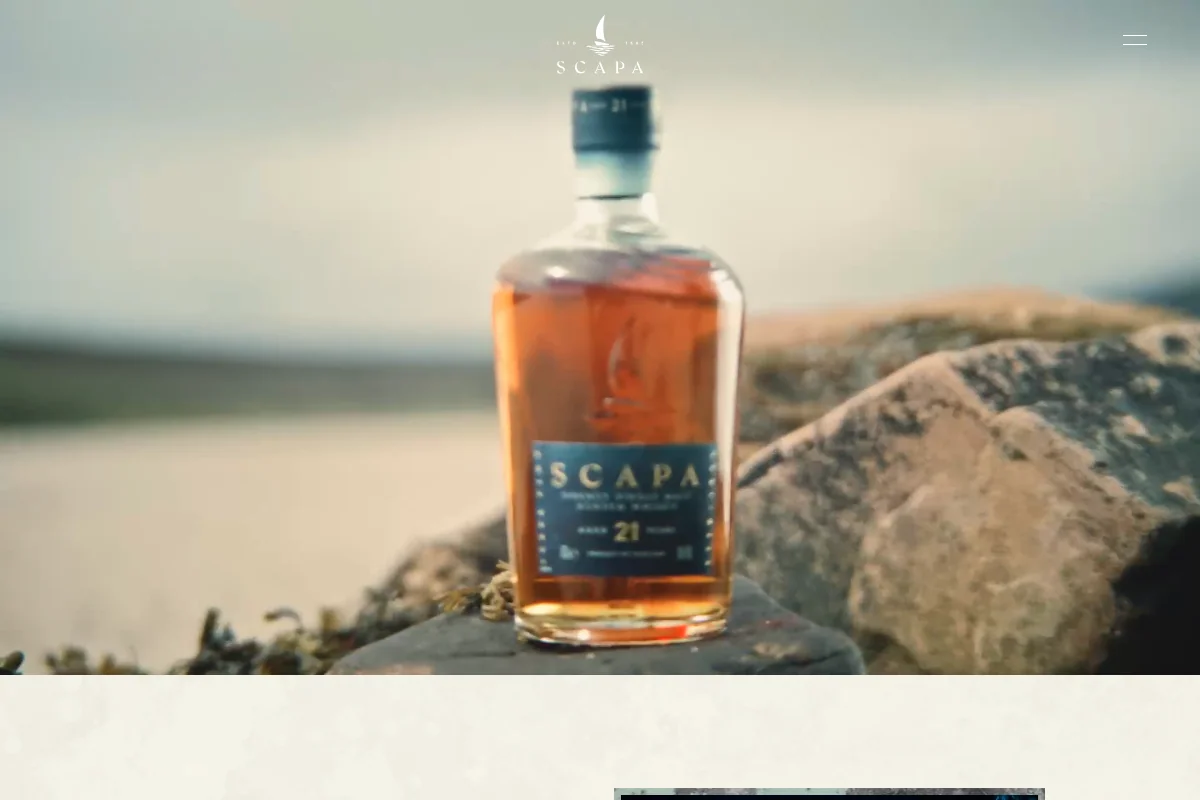
Scapa Distillery
Scapa Distillery stands on the shore of Scapa Flow near Kirkwall on Orkney Mainland, one of only two whisky distilleries on the Orkney Islands — the other being Highland Park Distillery roughly half a mile to the north. Founded in 1885 by Macfarlane & Townsend, a Glasgow blending firm, Scapa is now owned by Pernod Ricard and produces an approachable, honeyed island malt quite distinct from the heavily peated styles associated with Islay. It is the third most northerly whisky distillery in Scotland.
Scapa's history is inseparable from Scapa Flow itself — the great natural harbour that sheltered the Royal Navy's Grand Fleet through both World Wars. A near-catastrophic fire in 1919 was extinguished by sailors from the Fleet stationed nearby, a story that has become central to the distillery's identity. After decades of intermittent production and mothballing, a £2.1 million investment in 2004 and subsequent restoration under Pernod Ricard returned Scapa to full production in 2005. A visitor centre opened in 2015.
Tours
Available
On-site Shop
Open
Online Shop
Not available
History
Macfarlane & Townsend established Scapa in 1885 on the banks of the Lingro Burn, which flows into Scapa Flow. The location, though remote by Scottish mainland standards, offered pure water piped to avoid peat contamination and proximity to the harbour for shipping finished spirit.
On 16 January 1919, fire broke out at the distillery and threatened to destroy it entirely. Sailors from the remnants of the Royal Navy's Grand Fleet — still occupying Scapa Flow in the aftermath of the First World War — intervened, forming a human chain to carry buckets of seawater from the Flow to douse the flames. The distillery was saved.
In 1954 Hiram Walker & Sons Ltd acquired Scapa and undertook a significant rebuild. Allied Distillers purchased the operation in 1987 when they acquired Hiram Walker, and in 1994 mothballed the distillery. Limited production was carried out from 1997 using staff from neighbouring Highland Park, to keep the buildings maintained and prevent the warehoused stock from becoming the entire brand.
After Allied Domecq invested £2.1 million to restore the site in 2004, full production resumed in October 2005 under Pernod Ricard, who had acquired Allied Domecq. The brand was relaunched and a visitor centre opened in 2015. The distillery has operated continuously since, producing approximately 1,000,000 litres of spirit per year.
Production
Scapa operates with one wash still and one spirit still. Unusually, the wash still was originally a Lomond still — a hybrid design with a rectifying column that allows greater control over spirit character — though it now operates as a conventional pot still. Spirit stills are of standard pot still design. Annual capacity stands at approximately 1,000,000 litres.
Water is sourced from the Lingro Burn and piped to the distillery to minimise contact with the peat-covered Orkney landscape. This prevents peat pick-up in the process water, contributing directly to Scapa's unpeated character — the barley is not dried over peat smoke either. Worm tub condensers were used historically; the current configuration produces a notably clean, light spirit.
Tasting Character
Scapa is one of Orkney's most distinctive single malts, defined by its honeyed, unpeated character — a deliberate counterpoint to the heavily peated style of many island whiskies. The house profile centres on heather honey, vanilla, light tropical fruit, and a gentle floral quality. Despite water travelling through peat-covered Orkney moorland, the piped supply limits peat pick-up, keeping the spirit clean and sweet. The result is "raw, yet refined" in the Orkney island fashion, but without the smoke that defines so many island malts.
Scapa Skiren is matured in American first-fill oak casks for a fresh, honeyed expression. Scapa Glansa, launched in 2016, introduces light peat smoke for a departure from the distillery's unpeated norm. Age-statement expressions carry deeper complexity from extended maturation.
What They Produce
Notable Bottlings
- Scapa Skiren — NAS, American first-fill oak, honeyed and fresh, 40% ABV
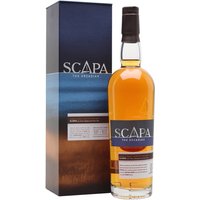
- Scapa Glansa£48.50 — NAS, lightly peated, launched 2016, 40% ABV
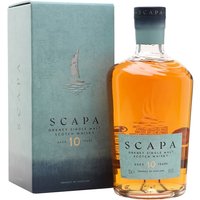
- Scapa 10 Year Old£52.25 — Core age-statement, clean and approachable
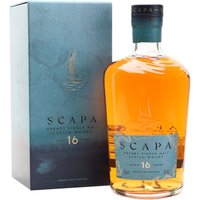
- Scapa 16 Year Old£91.75 — Extended maturation, deeper vanilla and dried fruit notes
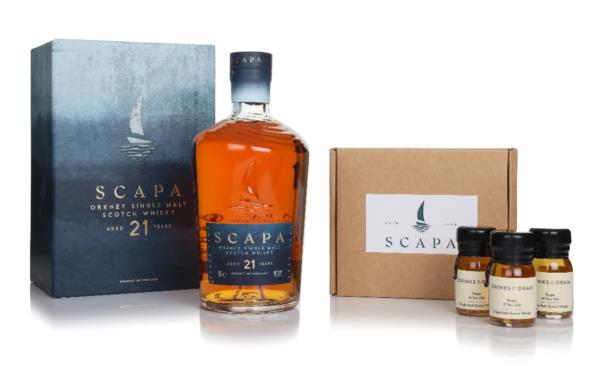
- Scapa 21 Year Old£225.95 — Cask strength, the most complex and concentrated expression
- Scapa 12 Year Old (discontinued)£299.00 — Former core expression
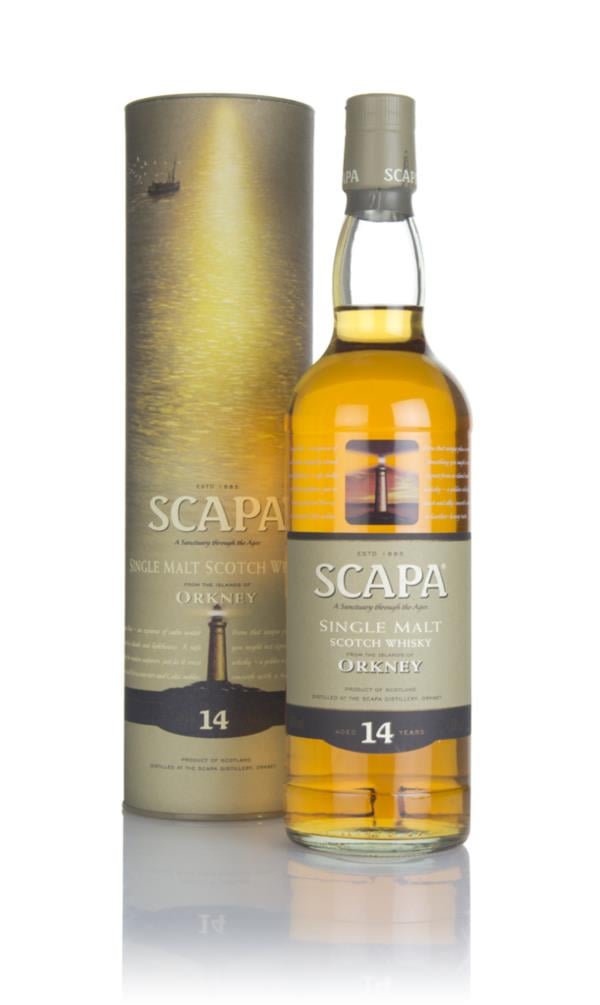
- Scapa 14 Year Old (discontinued)£250.00 — Former travel retail expression

Buy their whiskey
Browse our affiliate whisky retailers for Scapa Distillery and more.
The Whisky Barrel
The Whisky Shop
Loch Fyne Whiskies
Master of Malt
The Whisky Exchange
Digital Distiller
We earn a commission from purchases through these links at no cost to you. Affiliate disclosure
Visiting
Scapa's visitor centre, opened in 2015, offers several tours of varying lengths covering all main stages of Scotch whisky production. The setting on the shores of Scapa Flow — one of the most historically significant anchorages in the world — adds a powerful dimension to any visit. A physical shop is on site. Address: Scapa, Kirkwall, Orkney, KW15 1SE. Check the official website at scapawhisky.com for current tour availability and pricing.
Official Website