
The Dalmore Distillery
The Dalmore Distillery stands on the Cromarty Firth near Alness, Ross-shire, approximately 20 miles north of Inverness. Famous for its 12-pointed royal stag emblem and richly sherried, luxurious single malts, it is one of the most collectable whisky brands in the world. Founded in 1839 by Alexander Matheson — a partner in the Hong Kong trading house of Jardine, Matheson & Co. — The Dalmore is now owned by Whyte & Mackay, itself part of the Alliance Global group of the Philippines. The stag crest, adopted by the Mackenzie brothers in 1867, connects the brand to a legend of 1263 in which the Mackenzie clan chief Colin of Kintail saved King Alexander III from a charging stag.
The distillery produces approximately 4.2 million litres of spirit per year from four wash stills and four spirit stills. In March 2026 The Dalmore completed a reimagined visitor experience, reopening to guests with a fully personalised concierge model from 27 April 2026.
Tours
Available
On-site Shop
Open
Online Shop
Available
History
Alexander Matheson established The Dalmore in 1839, drawing on wealth accumulated through Jardine, Matheson's Far East trading operations. The Cromarty Firth site offered excellent water from the River Averon (flowing from Loch Morie in the Northern Highlands), strong local barley supply, and good coastal access for shipping.
In 1867 Andrew and Charles Mackenzie acquired the lease, adopting the 12-pointed Royal Stag emblem that has defined the brand ever since. The stag's significance is heraldic: in 1263, Colin of Kintail — chief of Clan Mackenzie — rescued King Alexander III from a charging stag, for which the grateful monarch granted the Mackenzies the right to bear a 12-pointed stag as their crest. The Mackenzie family owned and operated The Dalmore for nearly a century, developing the distillery into one of the most prestigious Highland operations.
A dramatic event in 1920 added The Dalmore to the footnotes of military history: an explosion linked to naval mine disposal in the Firth destroyed much of the distillery. The subsequent legal dispute between the distillery and the British Royal Navy lasted over five years, eventually reaching the House of Lords before settlement was reached. Reconstruction followed, restoring production to the Cromarty Firth site.
In 1960, Whyte & Mackay took control of The Dalmore, marking the beginning of the modern era. Under their stewardship the brand grew into a luxury prestige play, with Master Distiller Richard Paterson developing expressions that have reached prices in excess of £100,000 at auction. Alliance Global acquired Whyte & Mackay in 2014.
In 2026, The Dalmore completed an extensive reimagining of its visitor facilities, reopening from 27 April 2026 with a concierge-led model that offers entirely personalised experiences tailored to each visitor's interests.
Production
The Dalmore operates four wash stills in two sizes (16,500 litres and 8,250 litres) and four spirit stills in two sizes (11,000 litres and 7,300 litres). The spirit stills feature external shell-and-tube condensers. Annual production capacity stands at approximately 4.2 million litres. Water for production comes from the River Averon, flowing from Loch Morie through the Northern Highland landscape.
The defining characteristic of Dalmore production is the extensive sherry cask programme: the distillery works with a wide range of cask types including first-fill ex-bourbon, Matusalem Oloroso, Apostoles PX, Amoroso sherry, Cabernet Sauvignon wine casks, and a range of ultra-premium casks sourced from around the world. This breadth of wood influence drives the complexity and collectability that define the Dalmore range.
Tasting Character
The Dalmore is synonymous with rich, textured, and sherried Highland single malt. The house style centres on notes of dark chocolate, Seville orange, warming cinnamon, and concentrated dried fruit — a profile shaped by decades of heavy sherry cask influence. Richard Paterson has described the spirit as having "an amplification and crescendo on the palate that's so much richer than expectations."
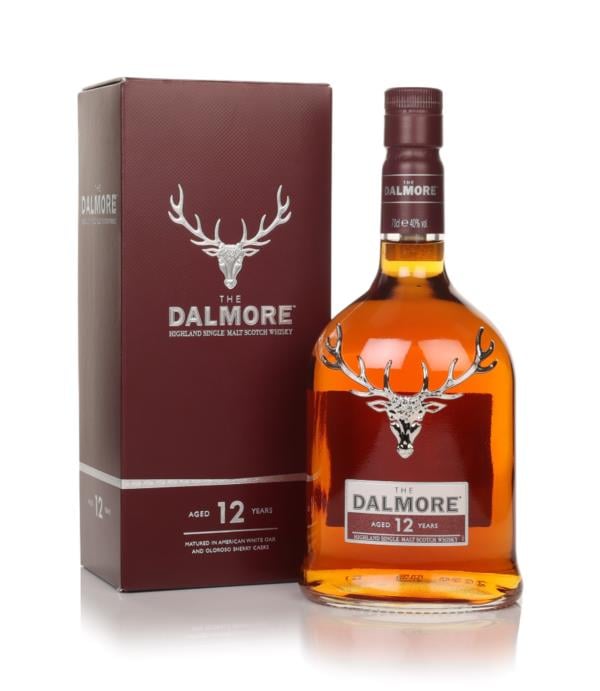
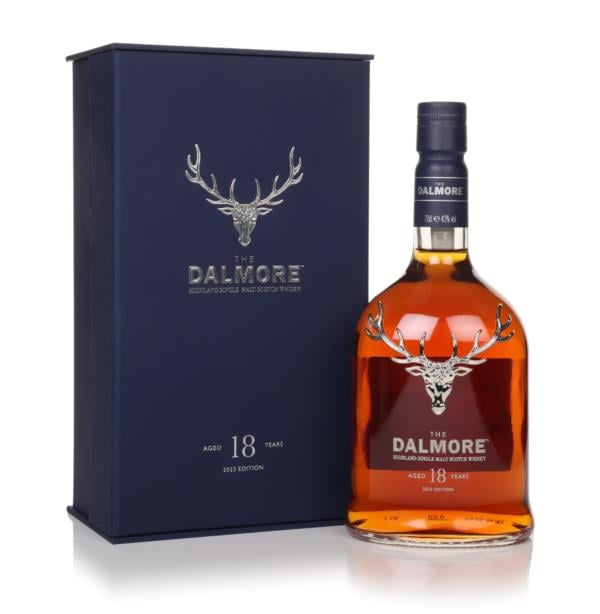
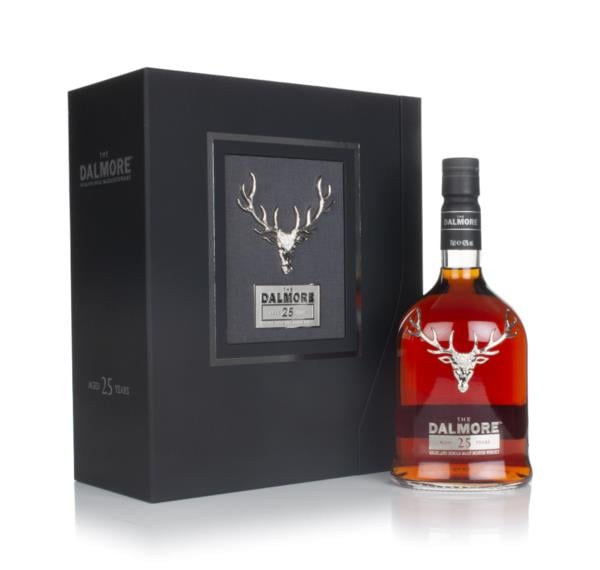
The 12 Year Old is the accessible foundation — a balance of citrus, chocolate, and spice that introduced millions to the Dalmore style. Higher expressions deepen this complexity: the 18 Year Old adds layers of vanilla and dried vine fruit from extended maturation; the 25 Year Old reaches into a profound, lingering richness; King Alexander III blends spirit from six different cask types for the brand's most celebrated non-age-statement expression.
What They Produce
Notable Bottlings
- Dalmore 12 Year Old£63.95 — Core entry expression, orange and chocolate, 40% ABV
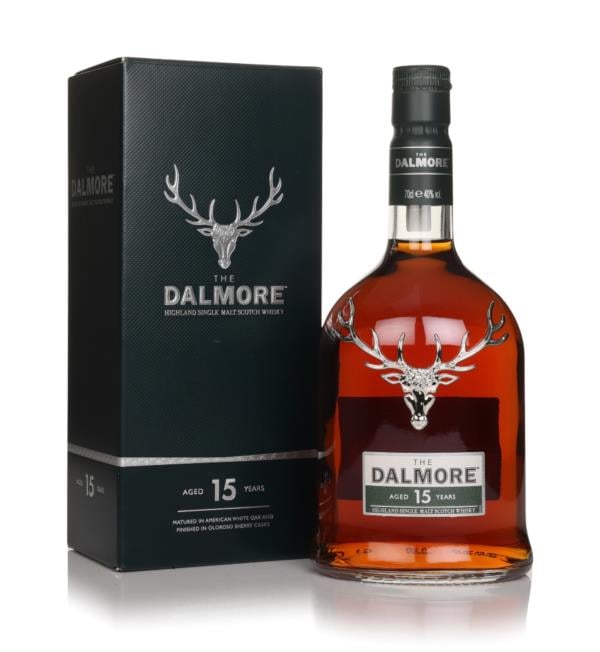
- Dalmore 15 Year Old£105.90 — Greater sherry influence, dried fruit and warming spice
- Dalmore 18 Year Old£292.00 — Complex and concentrated, multi-cask maturation
- Dalmore 25 Year Old£1347.95 — Premium aged expression, luscious and profound
- Dalmore King Alexander III£260.95 — Six cask types, no age statement, iconic expression
- Dalmore Cigar Malt Reserve£105.00 — Bold and rich, designed to complement cigars
- Dalmore 1263 King Alexander£260.95 — Ultra-premium tribute bottling
- Dalmore Constellation Collection£154.00 — Rare vintage expressions, individual cask bottles


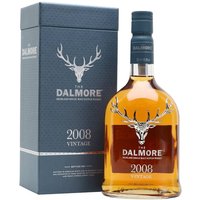
Buy their whiskey
Browse our affiliate whisky retailers for The Dalmore Distillery and more.
The Whisky Barrel
The Whisky Shop
Loch Fyne Whiskies
Master of Malt
The Whisky Exchange
Digital Distiller
We earn a commission from purchases through these links at no cost to you. Affiliate disclosure
Visiting
The Dalmore reopened to guests from 27 April 2026 with a completely reimagined visitor experience. Each visit is arranged individually through a dedicated concierge, with tastings and tour elements personalised to the visitor's interests and preferences. An online shop is available. Address: Alness, Ross-shire, IV17 0UT. Contact the distillery through thedalmore.com to arrange a visit.